Introduction
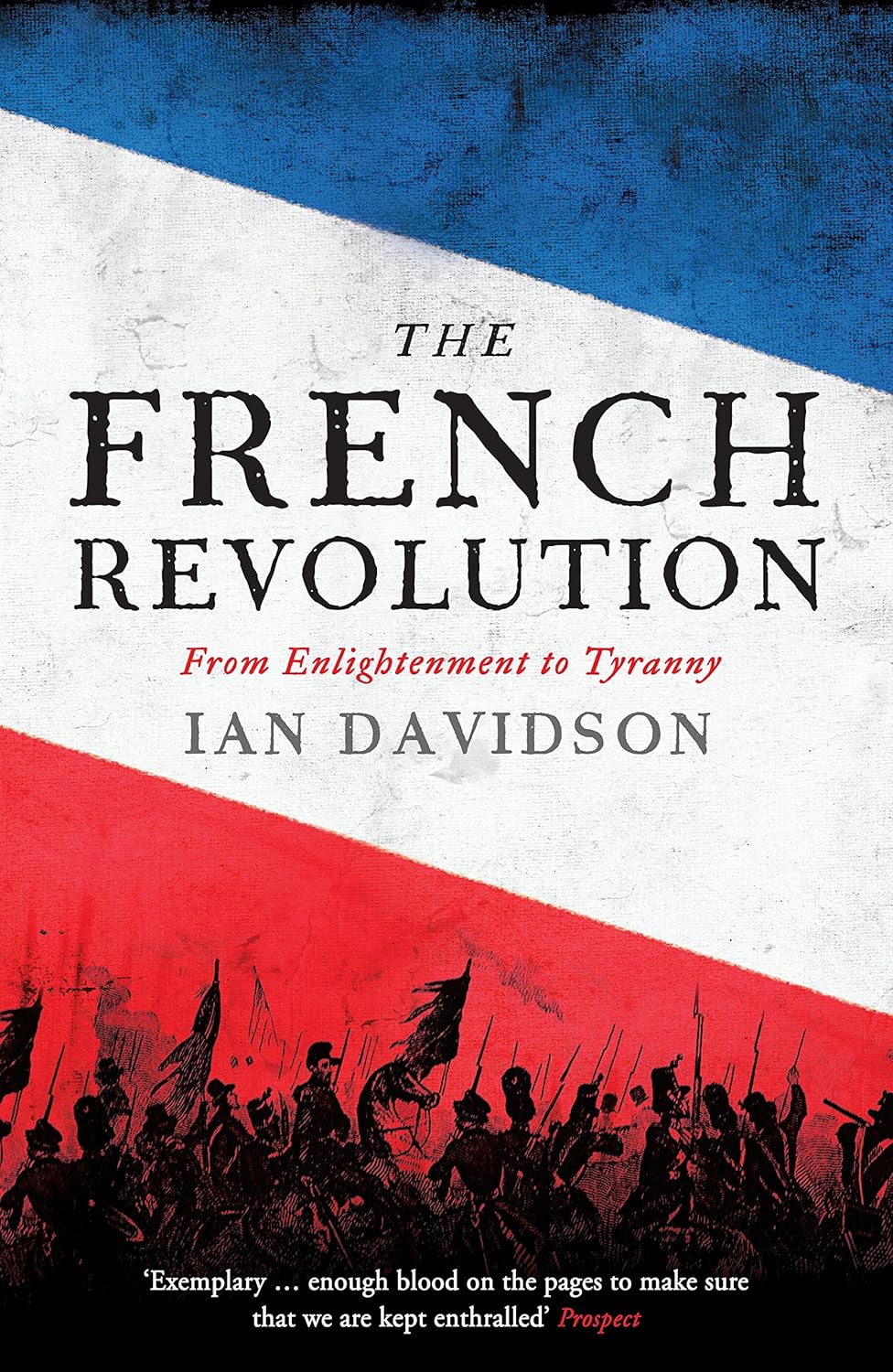
The French Revolution (1789–1799) stands as one of the most transformative events in world history. More than a political upheaval, it represented a seismic shift in the ideological, social, and religious foundations of Europe. The Revolution overthrew centuries-old monarchies, dismantled the feudal system, and aggressively challenged the authority of both the Catholic Church and traditional religious institutions. Its impact was not limited to France alone—it reverberated across Europe and the globe, inspiring both hope and fear, Revolution and reaction.
For many historians, the Revolution marked the dawn of modern secularism, nationalism, and democratic ideals. Yet for students of biblical prophecy—particularly those aligned with the historicist school of interpretation—the French Revolution holds an even deeper, spiritual significance. Many have viewed the convulsions of this turbulent decade as a vivid and literal fulfilment of specific apocalyptic visions recorded in the Book of Revelation. Of particular interest is Revelation 16, which describes the pouring out of the “seven last plagues”—a series of divine judgments unleashed upon a world in rebellion against God.
This article explores the prophetic interpretation of Revelation 16 in the context of the French Revolution, examining how specific events correspond to the symbolic language of the plagues. Special attention is given to the fifth and sixth plagues, which speak of darkness upon the “seat of the beast” and the drying up of the “great river Euphrates,” respectively. These prophetic images, when interpreted through a historicist lens, reveal a striking parallel with the Revolution’s assault on papal authority and the unravelling of the political-religious structures of the Old World.
In exploring these connections, we aim to provide not only a historical analysis but also a theological reflection on how the dramatic upheavals of the 18th century may fulfil the imagery and warnings of Revelation. Could the French Revolution have been more than a pivotal historical event? Could it also have served as a divine signpost in the unfolding narrative of prophecy?
Revelation 16: The Seven Last Plagues – A Brief Overview
Revelation 16 presents a dramatic and solemn depiction of divine judgment, unfolding through a sequence of seven plagues poured out upon the Earth by seven angels. These judgments are described as the “seven last plagues,” for in them “, the wrath of God is complete” (Revelation 15:1). Unlike earlier judgments in Revelation that are partial or meant as warnings, the plagues of chapter 16 represent final and irreversible acts of divine justice, signalling the closing scenes of Earth’searth’s history just before the Second Coming of Jesus Christ.
Here is a more detailed summary of each plague:
- First Plague – Painful Sores:
- This plague targets those who have received the “mark of the beast” and worship its image. They are afflicted with grievous and malignant sores. Symbolically, this could represent the spiritual and moral corruption that overtakes those who have willfully aligned themselves with false religious or political systems despite divine warnings.
- Second Plague – Sea Turns to Blood:
- The sea becomes “the blood of a dead man,” and every living creature in the sea dies. This may be seen not only as a literal environmental catastrophe but also symbolically representing the death of maritime commerce, naval power, or nations closely tied to sea-based economies and empires.
- Third Plague – Rivers and Springs Turn to Blood:
- Freshwater sources are turned to blood, echoing the plagues of Egypt (Exodus 7). The angel of the waters declares this is a just judgment upon those who have “shed the blood of saints and prophets.” Under the historicist lens, this plague could symbolise divine retribution against systems and powers that have historically been responsible for persecuting the faithful, such as during the medieval Inquisition or other religious conflicts.
- Fourth Plague – Scorching Heat from the Sun:
- In this plague, the sun intensifies in heat, scorching humanity with fire. Instead of repentance, people blaspheme God. Interpretively, this may signify intensified political or spiritual oppression, with “the sun” serving as a symbol of ruling power or enlightenment turned destructive or truth being used coercively rather than redemptively.
- Fifth Plague – Darkness on the Seat of the Beast:
- Darkness falls upon “the seat of the beast,” and the kingdom is filled with pain. This plague may reflect a collapse or obscuring of the authority of the beast power commonly identified in historicist prophecy with papal Rome or a corrupt religious-political union. The resulting anguish and confusion signify the disintegration of long-standing institutions that once dominated the spiritual and political landscape.
- Sixth Plague – Drying Up of the Euphrates & Armageddon:
- The sixth angel dries up the great river Euphrates, preparing the way for the “kings of the East.” This is followed by the emergence of three unclean spirits and demonic powers, which perform miracles and gather the world for the great battle of Armageddon. In biblical times, the Euphrates supported Babylon, and its drying up facilitated the conquest by Cyrus and the Medo-Persians. Thus, in prophetic symbolism, this may represent the withdrawal of support for spiritual Babylon and the final spiritual and political crisis as global powers unite against God’s people.
- Seventh Plague – Global Cataclysm:
- The final plague brings a massive earthquake, unprecedented in magnitude, causing the fall of cities, the disappearance of mountains and islands, and hailstones weighing about a talent (approximately 75 pounds) falling from heaven. This is often interpreted as a representation of the final collapse of human systems—political, religious, and economic—under the weight of divine judgment. It signifies the end of the world as we know it and paves the way for Christ’s triumphant return.
Each of these plagues carries both literal and symbolic weight. They are not merely acts of destruction but also deeply theological messages revealing the justice of God in the face of prolonged rebellion. From a historicist perspective, Revelation is understood as a continuous historical timeline, with these plagues falling during the closing phase of Earth’s history, possibly reflecting upheavals that began with events like the French Revolution and will intensify leading up to the end.
In this view, the plagues are not random or isolated judgments but are tied to specific historical and prophetic developments. As we will explore in the following sections, many historicist interpreters have identified clear connections between the events of the French Revolution. Its attacks on the monarchy, the church, and the social order and the imagery of the fifth and sixth plagues in particular. These connections offer profound insight into how divine prophecy may have been fulfilled throughout human history and how the spiritual realities behind global events continue to unfold toward their climactic conclusion.
The Fifth Plague: Darkness on the Seat of the Beast
Revelation 16:10–11 records:
“And the fifth angel poured out his vial upon the seat of the beast; and his kingdom was full of darkness; and they gnawed their tongues for pain, and blasphemed the God of heaven because of their pains and their sores, and repented not of their deeds.”
This plague brings a symbolic darkness upon the very seat—the centre—of the beast’s power. In traditional Protestant and historicist interpretations, the beast is widely understood to represent the papal system, specifically papal Rome, which fused religious authority with civil power during the medieval and early modern periods. The “seat of the beast” can be seen not only as the literal city of Rome but more broadly as the political and religious infrastructure of Catholic Europe that had supported papal supremacy for over a millennium.
During the radical phase of the French Revolution, particularly from 1793 to 1794, France experienced a moment of unparalleled spiritual and ideological darkness. Known as the Reign of Terror, aggressive de-Christianization, public executions, widespread fear, and an official embrace of atheism and rationalism marked this period.
Several key developments during this time vividly mirror the imagery of the fifth plague:
Abolition of Christianity: Churches were closed or converted into “Temples of Reason.” Religious symbols were destroyed, clergy were exiled or executed, and religious observance was banned or mocked. In November 1793, the Cathedral of Notre-Dame in Paris was transformed into a “Temple of Reason,” where the Goddess of Reason was worshipped in a staged, state-sponsored ceremony. This signalled not only a rejection of the church, but of God Himself.
Spiritual Darkness: The rejection of the Bible, the suppression of the gospel, and the elevation of human reason above divine revelation resulted in a deep spiritual vacuum. The “darkness” mentioned in Revelation can thus be interpreted as both literal (the rejection of light and truth) and metaphorical (moral confusion and ideological blindness). France, once known as the “Eldest Daughter of the Church,” became for a time the epicenter of militant irreligion.
Moral and Social Anguish: The people “gnawed their tongues for pain.” This may describe the societal agony caused by internal strife, betrayal, paranoia, and the ever-present threat of execution. During the Reign of Terror, thousands were executed by guillotine, often without a fair trial. Even the revolutionaries themselves fell victim to the violence they unleashed. This pain and torment was not only physical but also psychological and emotional—a nation in moral freefall.
Blasphemy and Hardened Hearts: Revelation says the people blasphemed God and did not repent. In Revolutionary France, even amid suffering, there was no widespread return to spiritual humility. Instead, many doubled down on anti-religious sentiment, viewing faith as the enemy of reason and progress.
The French Revolution, viewed through this lens, becomes a historical embodiment of the fifth plague, a warning of the consequences that occur when a society wholly rejects God, substitutes human authority for divine law, and exalts secular ideologies above eternal truth.
The Sixth Plague: The Drying Up of the Euphrates
Revelation 16:12 declares:
“And the sixth angel poured out his vial upon the great river Euphrates; and the water thereof was dried up, that the way of the kings of the east might be prepared.”
To understand this prophecy, we must recall that the Euphrates River was the life source of ancient Babylon. The city’s survival depended on the river, and it was through the strategic diversion of the Euphrates that Cyrus the Great entered and conquered Babylon (as prophesied in Isaiah 44–45). In Revelation, Babylon represents an end-time, counterfeit religious-political system—a spiritual power that opposes God’s truth and persecutes His people.
Thus, the drying up of the Euphrates symbolises the withdrawal of support from modern spiritual Babylon, paving the way for divine intervention and the ultimate triumph of God’s kingdom.
About the French Revolution, several prophetic parallels emerge:
The Collapse of Church-State Power: Before the Revolution, the Catholic Church and the French monarchy operated in tandem, mutually reinforcing their authority over the people. The Church provided religious legitimacy to the monarchy, and in return, the state upheld the Church’s privileges and power. The Revolution dismantled this alliance. The monarchy was overthrown, the king was executed in 1793, and the Church was nationalised, subordinated, or disbanded. This marked a historic withdrawal of public and political support from the twin pillars of Old World power.
The “Drying Up” of Institutional Support: Just as the Euphrates was diverted to allow for the fall of Babylon, the ideological and societal shift in Revolutionary France dried up the traditional support for religious and royal authority. Across Europe, revolutionary ideas began to spread, undermining the foundations of monarchies and established churches. What had once been untouchable became vulnerable.
Preparation for the “Kings of the East”: In a prophetic and symbolic sense, many historicist interpreters have understood the “kings of the East” as either Christ and His angelic host (drawing from biblical imagery of God coming from the east) or as agents of divine judgment and deliverance. The drying up of the Euphrates prepares the way for God’s final intervention—the coming of Christ and the establishment of His kingdom. In this view, the French Revolution may be seen as part of a broader historical process that removes corrupt structures, making way for spiritual awakening and the final triumph of truth.
Global Implications: The ideological seeds sown during the French Revolution —secularism, nationalism, and the rejection of divine authority —would continue to spread and influence global history. The collapse of ecclesiastical tyranny marked a prophetic milestone, foreshadowing the final confrontation between good and evil described later in Revelation.
Revelation, Reason, and Revolution
The French Revolution was far more than a political upheaval. It was a cultural and intellectual earthquake. Emerging from the fertile ground of the Age of Enlightenment, the Revolution was energised by ideas of reason, science, individual rights, and scepticism toward traditional authority. Enlightenment thinkers such as Voltaire, Rousseau, and Diderot laid the philosophical groundwork for challenging the authority of the monarchy, nobility, and, perhaps most consequentially, the Church.
While the Enlightenment produced many enduring contributions to modern governance, civil rights, and education, it also gave rise to a militant secularism that sought to redefine human society independently of God. At the height of the Revolution, this rejection of divine authority reached its most extreme form in the worship of the “Goddess of Reason,” celebrated in Notre-Dame Cathedral in 1793. This symbolic act was not merely a political gesture. It was deeply theological. It represented an intentional inversion of Christian worship, replacing the Creator with the created and elevating human intellect above divine Revelation.
Many Protestant commentators, especially within the historicist tradition, have interpreted this period as a striking illustration of what happens when a society deliberately severs itself from its spiritual roots. In Ellen G. White’s The Great Controversy, the French Revolution is portrayed as a sobering fulfilment of prophecy and a vivid warning about the dangers of rejecting God’s law:
- Moral Collapse: When divine law is dismissed as irrelevant or oppressive, societies do not find liberty—they often plunge into chaos, cruelty, and confusion. The Reign of Terror, with its mass executions, ideological purges, and political paranoia, reflects what can happen when a nation attempts to construct justice and morality on shifting human standards.
- True Freedom Defined: The Revolution promised liberty but delivered tyranny. Biblical liberty is not the absence of all restraint but the Freedom to live in harmony with God’s will. As Scripture declares, “Where the Spirit of the Lord is, there is liberty” (2 Corinthians 3:17). Only when individuals and nations are aligned with God’s moral principles can they experience true Freedom, dignity, and peace.
Thus, the French Revolution becomes a powerful cautionary tale, dramatising the truth that human reason, unmoored from divine Revelation, becomes a destructive force. The Revolution was, in many ways, a practical outworking of Revelation’s prophetic warnings: a kingdom full of darkness (the fifth plague), drying up of former sources of power (the sixth plague), and the gathering of nations into spiritual confusion and conflict.
Lessons and Applications
Prophetic Fulfilment in History
The French Revolution offers a historical lens through which Revelation 16 can be meaningfully interpreted. Far from being abstract or disconnected from real events, biblical prophecy is deeply intertwined with political, social, and ideological developments throughout history. The plagues described in Revelation are not just future judgments—they may also reflect past milestones in the great cosmic struggle between good and evil. The Revolution shows how God’s Word speaks powerfully about the rise and fall of empires, the collapse of institutions, and the reordering of societies.
This understanding gives urgency and relevance to prophecy. It encourages believers to read Scripture not only for future insight but also to discern the hand of God in the past and present.
Moral Caution for Our Time
The moral and societal breakdown of Revolutionary France is not merely a historical anomaly; it is a profound and lasting phenomenon. It is a universal warning. Whenever God’s law is dismissed, whether by a nation, a church, or an individual, the result is inevitably disorder, suffering, and spiritual blindness. In our age, where moral relativism, secularism, and religious scepticism are on the rise, the French Revolution serves as a prophetic warning:
- It is possible to lose truth in the pursuit of Freedom.
- Without a firm foundation in God’s Word, even noble causes can devolve into oppression and despair.
- Spiritual darkness often masquerades as Enlightenment, but its fruit is division, fear, and confusion.
This calls for vigilance. Christians today are called not only to study prophecy but also to live by the moral light of God’s law and embody a different kingdom —one of truth, justice, and mercy.
Hope in Judgment and Renewal
While the judgments of Revelation may appear fearful, they are not without purpose. The plagues, including the darkness and drying up of Revelation 16, are not the final word; they are preparatory acts leading to the ultimate hope of Scripture: the Second Coming of Christ and the full establishment of God’s eternal kingdom.
The French Revolution, though marked by tragedy, also shattered oppressive alliances between Church and state that had stifled religious Freedom and biblical truth. In the aftermath, new opportunities for spiritual renewal and mission emerged. The same pattern will repeat on a global scale. The fall of corrupt systems, whether religious, political, or ideological, prepares the way for God’s truth to shine more brightly.
As Revelation 16 transitions into the final battle of Armageddon and the triumph of Christ, we are reminded that judgment is not the end of the story. It is the pathway to redemption.
Conclusion
The French Revolution stands as one of the most pivotal and transformative events in human history. It undeniably advanced crucial ideals such as freedom, equality, and the assertion of human rights. These ideals have shaped modern democratic societies and influenced numerous justice movements worldwide. However, alongside these noble aspirations, the Revolution also starkly revealed the perils of radical secularism, moral relativism, and the outright rejection of God’s authority.
When viewed through the prophetic lens of Revelation 16, particularly about the fifth and sixth plagues, the French Revolution emerges not merely as a political upheaval but as a profound symbolic fulfilment of biblical prophecy. The darkness that fell upon the seat of the beast vividly captures the spiritual and social chaos unleashed when divine law is cast aside. The drying up of the Euphrates parallels the dismantling of long-standing religious and political alliances, clearing the way for the final confrontation between the forces of evil and the kingdom of God.
For believers who approach Scripture through the historicist perspective, the Revolution is far more than an isolated historical incident; it is a prophetic milestone, a significant chapter in the unfolding drama of salvation history. It serves as a solemn reminder that history is not random or cyclical but progressively moving toward a divinely ordained climax, as foretold in the visions of Revelation.
This prophetic understanding encourages Christians to look beyond the surface of current events and recognise the spiritual realities that shape our world. It challenges believers to remain vigilant amid cultural upheaval, to resist the temptation to embrace secular ideologies that reject God, and to anchor their hope firmly in the promises of Scripture.
Ultimately, the French Revolution points forward to the greatest deliverance yet to come—the triumphant return of Christ, when all rebellion will be ended, justice will be restored, and God’s eternal kingdom will be established in fullness. It is a call to faithfulness, perseverance, and trust in God’s sovereign plan as history marches toward its ultimate fulfilment.
In this light, the Revolution is both a warning and a beacon. This historical event illuminates the spiritual battle of the ages and invites us to participate in God’s redemptive purpose, confident that the final victory belongs to Him, who reigns forever and ever.

 My Testimony