
 My Testimony
Christianity in Moldova
A Powerful History of Faith, Culture, and Revival
By Neil McBride, Founder and CEO of Downtown Angels

Introduction
Nestled between Romania and Ukraine, the Republic of Moldova is a small, landlocked nation in Eastern Europe with a rich tapestry of cultural, historical, and spiritual heritage. Though modest in size and often overlooked on the global stage, Moldova possesses a deep and enduring connection to Christianity. This faith has become an integral part of the nation’s identity. From medieval monasteries perched in the countryside to candlelit Orthodox cathedrals in bustling city centres, the Christian faith is more than a tradition in Moldova; it is a living testimony to the nation’s spirit, survival, and soul.
Christianity in Moldova is predominantly Eastern Orthodox, a legacy that reflects the region’s complex historical narrative shaped by Byzantine influence, Ottoman occupation, Romanian unity, Russian imperialism, and Soviet atheism. These overlapping empires and shifting borders left behind a religious landscape marked by both unity and division — a duality that continues to influence the nation’s political and cultural direction today. While the Orthodox Church remains the dominant religious force, Moldova also hosts a diverse spectrum of Christian denominations, including Catholics, Protestants, and growing Evangelical communities.
Yet the story of Christianity in Moldova goes far beyond denominational breakdowns and historical milestones. It is a story of resilience — of a people who preserved their faith through foreign domination, Communist repression, and cultural upheaval. It is a story of division, as differing allegiances to the Russian and Romanian Orthodox patriarchates continue to reflect broader geopolitical tensions. It is a story of reform and revival as new generations of Moldovans seek a deeper, more personal connection to faith in a rapidly changing society.
This article examines the evolution of Christianity in Moldova from its early roots and historic transformations to its current presence in the daily lives of Moldovans. We will explore how faith has shaped national identity, how it manifests in culture and community, and how the Church responds to modern challenges such as secularism, migration, and political polarisation. Understanding Christianity in Moldova provides insight not only into the nation’s religious life but also into its heart, history, and aspirations for the future.
Historical Background: The Christianization of Moldavia
The Christian roots of Moldova stretch deep into antiquity, long before the formation of the modern nation-state. The territory that is now the Republic of Moldova was once part of the ancient region of Dacia, which was later incorporated into the Roman Empire. During the Roman occupation of the 2nd and 3rd centuries AD, the seeds of Christianity were sown through the presence of Roman soldiers, traders, and missionaries, many of whom had already adopted the Christian faith. Archaeological finds and historical references suggest that Christian communities existed in the region as early as the 3rd and 4th centuries, although they were small and often isolated.
After the fall of the Western Roman Empire, the region was subjected to waves of migration and invasion by various tribes, including the Goths, Huns, Slavs, and eventually the Magyars. Despite the political instability, Christianity endured and even spread, particularly as Byzantine influence reached northward into the Carpathian and Danubian regions. The Eastern Roman (Byzantine) Empire served as a cultural and spiritual beacon, and it was through this Eastern Christian tradition that the Orthodox faith began to solidify in what would later become Moldavia.
By the 14th century, the formal process of Christianization gained significant momentum with the establishment of the Principality of Moldavia. This feudal state encompassed much of modern-day Moldova and northeastern Romania. The ruling elite embraced Eastern Orthodoxy as the state religion, aligning themselves with the Ecumenical Patriarchate of Constantinople, which was the primary authority of the Eastern Orthodox world at the time. This strategic alignment not only reinforced the principality’s religious identity but also offered it a degree of protection and legitimacy in the face of powerful neighbours and external threats.
The Orthodox Church quickly became a cornerstone of both spiritual and political life. Rulers built churches and monasteries as acts of piety, national pride, and political diplomacy. These sacred spaces became more than places of worship—they were centres of literacy, education, manuscript production, and artistic expression. Frescoes, icons, and religious texts produced in the monastic scriptoria preserved and transmitted spiritual knowledge and cultural values to future generations.
One of the most iconic symbols of Moldavian Orthodoxy is the Putna Monastery, founded in 1466 by Stephen the Great (Ștefan cel Mare). Stephen is one of Moldova’s most celebrated historical figures — a warrior prince who led the principality through countless battles to protect its autonomy and a devout Christian ruler who commissioned dozens of churches and monasteries during his reign. For his contributions to the faith, Stephen was canonized by the Romanian Orthodox Church in 1992 and is venerated as a saint.
Stephen’s legacy was not limited to military victories; he helped forge a distinct Moldavian Christian identity by blending Byzantine religious tradition with local customs and the Romanian language. The architecture of his churches, often adorned with intricate exterior frescoes and stone carvings, remains a defining feature of Moldavian sacred art. These constructions were not merely expressions of personal devotion but declarations of faith that served as political symbols of resistance against Ottoman expansion and Western Roman Catholic influence.
As the centuries progressed, the Orthodox Church remained deeply entwined with Moldavian society. Religious leaders frequently served as advisors to princes, mediators in disputes, and guardians of national identity during periods of foreign occupation. The monastic tradition, with its emphasis on asceticism, prayer, and scholarship, helped preserve the Moldavian language and culture through turbulent periods of war and foreign domination.
In summary, the Christianization of Moldavia was not a single event but a gradual and profound transformation that unfolded over centuries. Rooted in ancient encounters with the faith, shaped by Byzantine theology and politics, and reinforced by local rulers like Stephen the Great, Orthodoxy became the spiritual backbone of the Moldavian people. This legacy continues to resonate in the modern Republic of Moldova, where ancient monasteries remain as living monuments to a resilient and enduring Christian heritage.
The Orthodox Church: A National Anchor
The Eastern Orthodox Church has long been the spiritual cornerstone of Moldovan society, deeply intertwined with the nation’s cultural identity and historical development. From the earliest days of the Principality of Moldavia in the 14th century, Orthodox Christianity profoundly influenced the worldview of both rulers and peasants, providing not only spiritual guidance but also a comprehensive framework for governance, education, and community life.
Following the fall of the Byzantine Empire in 1453, the Orthodox Christian world entered a period of fragmentation and realignment. The once-unified Eastern Church was divided among various patriarchates, each asserting jurisdiction over newly forming or occupied territories. Moldavia, situated between the Eastern Orthodox heartlands of Constantinople and Moscow, experienced shifting ecclesiastical loyalties. Initially, it remained under the jurisdiction of the Ecumenical Patriarchate of Constantinople, preserving close spiritual ties with the Eastern Orthodox tradition. However, political pressures and regional realignments eventually led to increased Russian ecclesiastical influence, particularly as Russian power expanded southward in the 18th and 19th centuries.
Today, Moldova’s Orthodox population is effectively divided between two major ecclesiastical bodies, reflecting not only religious diversity but also geopolitical and cultural tensions:
The Moldovan Orthodox Church (MOC) – Moscow Patriarchate
The Moldovan Orthodox Church is an autonomous body under the Russian Orthodox Church (Moscow Patriarchate). With the backing of Russian religious institutions and political influence, it is by far the largest and most powerful Orthodox jurisdiction in the country. It commands allegiance from the majority of Moldova’s Orthodox Christians and holds considerable sway over national holidays, public ceremonies, and even political discourse. The MOC also benefits from historical continuity, having remained active during the Soviet period when it was aligned with the Russian state.
The Bessarabian Orthodox Church – Romanian Patriarchate
In contrast, the Bessarabian Orthodox Church, which operates under the auspices of the Romanian Orthodox Church, appeals to Moldovans who identify more strongly with the Romanian language, culture, and history. While smaller in numbers and influence, this Church represents an important spiritual alternative and a symbolic reclamation of national identity, especially for those who advocate for closer ties with Romania or support the idea of Moldovan-Romanian unity. Re-established in the 1990s, the Bessarabian Church has often faced bureaucratic resistance and legal battles for recognition and equal treatment.
The existence of these two parallel Orthodox Churches is more than a religious distinction — it reflects a broader national identity conflict that has shaped Moldova’s post-Soviet era. On one side are those who see Moldova as culturally and historically linked to Romania; on the other, those who emphasise a Slavic and Eastern identity with close ties to Russia. This ecclesiastical divide, although not violent, influences everything from language and politics to education, foreign policy, and media representation.
Christianity and Moldovan Identity
For centuries, Orthodoxy served as a unifying and stabilising force in Moldova, especially in the face of external domination. During the long period of Ottoman suzerainty, which lasted from the 16th to the 19th century, Moldavia retained its Christian Orthodox faith despite the political supremacy of a Muslim empire. The Ottomans allowed the principality to govern its internal religious affairs with relative autonomy, and the Orthodox Church played a central role in maintaining social cohesion within the principality. Monasteries became sanctuaries of faith, culture, and education, preserving manuscripts, promoting literacy, and providing moral leadership.
However, the religious landscape shifted dramatically in the early 19th century when Bessarabia, the eastern part of historic Moldavia, was annexed by the Russian Empire in 1812. This initiated a period of Russification, during which the Orthodox Church was brought more directly under the control of the Russian Orthodox Patriarchate. Church Slavonic and Russian began to replace Romanian in liturgy and church administration. The local clergy were often trained in Russian seminaries, and efforts were made to align Moldovan religious practice with that of the Russian heartland.
This era marked the beginning of the politicisation of religion in Moldova, as ecclesiastical alignment became a tool of imperial influence. Although the Orthodox faith remained central to Moldovan life, its expression and leadership were increasingly dictated by foreign powers. This further complicated Moldovan identity, as the people found themselves caught between linguistic, cultural, and theological currents from both East and West.
After World War I, in 1918, Bessarabia voted to unite with the Kingdom of Romania, and the Romanian Orthodox Church resumed jurisdiction over the region. Romanian language and liturgy were reinstated, and religious institutions flourished for a time under a renewed national ethos. However, this revival was short-lived.
In 1940, under the terms of the Molotov-Ribbentrop Pact, the Soviet Union annexed Bessarabia and established the Moldavian Soviet Socialist Republic. This event ushered in one of the darkest periods in the history of Christianity in Moldova.
The Soviet Era: Suppression and Underground Faith
Under Soviet rule, religion in Moldova was subject to aggressive suppression as part of the broader Communist campaign to eliminate faith from public and private life. The Soviet regime promoted atheism as a state ideology, and religious institutions were systematically targeted. Churches were shuttered or repurposed into warehouses, museums, or community halls. Monasteries were closed, their lands confiscated, and many clergy were imprisoned, exiled, or even executed under accusations of anti-Soviet activity.
Religious education was outlawed, Bibles and other Christian texts were banned, and state propaganda portrayed the Church as regressive, superstitious, and harmful to socialist progress. Believers were often marginalised, surveilled, and discouraged from practising their faith. Participation in religious ceremonies could result in social ostracisation or the loss of employment and educational opportunities.
Despite these brutal conditions, the Christian faith endured underground. Families quietly baptised their children at home, celebrated holy days in secret, and passed down prayers, hymns, and values through oral tradition. Some elderly priests continued to minister in secret, conducting liturgies in basements, forests, and private homes. This clandestine Christianity preserved the spiritual identity of many Moldovans during decades of official repression.
By the 1980s, the number of active churches in Moldova had dwindled drastically. In many parts of the country, entire generations have grown up without ever attending a religious service, while others have maintained only a shadow of their ancestral beliefs. Nevertheless, the faith did not die — it merely went quiet, waiting for a chance to re-emerge.
That opportunity came with the dramatic collapse of the Soviet Union in 1991. As Moldova declared its independence and began the journey toward democracy, the Orthodox Church experienced a powerful revival. Thousands of churches and monasteries were restored, rebuilt, or reopened. Religious education and public worship returned. Icons reappeared in homes and public buildings. The bells of churches that had stood silent for decades rang out once more — not just as a call to prayer but as a symbol of spiritual freedom and national renewal.
Post-Independence Religious Revival
The collapse of the Soviet Union in 1991 marked a pivotal turning point for Moldova—not just politically and economically but also spiritually. With the Republic of Moldova’s newfound independence came an outpouring of religious expression that had been stifled for decades. Christianity reemerged as a central and vital force in national life, reclaiming its historical position in society almost overnight.
Thousands of Orthodox churches and monasteries—many of which had been abandoned, destroyed, or repurposed during the Soviet era—were reopened, rebuilt, or newly constructed. Church bells that had remained silent for generations rang once more, signalling not only the return of public worship but also the revival of national and cultural identity through faith. Religious icons and crosses reappeared in homes, schools, and even government buildings, symbolising the deep yearning of the people to reconnect with their spiritual roots.
Religious festivals, such as Pascha (Orthodox Easter), Christmas, and Epiphany, regained widespread prominence, becoming not just religious observances but also important public and communal events. Candlelit Easter vigils, long processions, and the blessing of food baskets once again became common sights in both urban and rural areas. The Bible was reprinted and widely distributed, and for many Moldovans, reading scripture became a deeply personal act of reclaiming a lost heritage.
Religious education also made a cautious return, particularly in rural schools and Orthodox parishes. Though optional and sometimes limited by resources or political sensitivities, religious instruction became a means of rebuilding a spiritual foundation among the younger generation. The Orthodox Church quickly regained its position as a moral and cultural authority, with priests emerging as influential voices in media, education, and even politics. This religious revival was not simply institutional—it was deeply personal for a society hungry for meaning, stability, and connection after decades of ideological oppression.
Protestantism and Evangelical Movements
Although Eastern Orthodoxy remains the dominant faith in Moldova, the post-Soviet era also created fertile ground for the growth of Protestant and Evangelical Christian movements. During the 1990s and early 2000s, Moldova experienced a steady influx of missionaries, Christian NGOs, and independent church planters, particularly from the United States, South Korea, and Western Europe.
The Baptist Union of Moldova, Pentecostal churches, and Seventh-day Adventist congregations began expanding rapidly, particularly in under-resourced rural communities and among young people seeking a more personal and accessible form of faith. These churches often offered a more dynamic and community-oriented style of worship, featuring live music, Bible studies, social support groups, and youth events that contrasted with the traditional and hierarchical nature of Orthodox liturgy.
For many Moldovans, especially younger believers and new converts, Evangelical churches provided not just spiritual guidance but tangible help—from food pantries and children’s ministries to addiction recovery programs and vocational training. These ministries often filled social gaps left by the post-Soviet government, becoming trusted institutions in their own right.
Evangelicals in Moldova emphasise personal conversion, Bible literacy, and active discipleship. Many congregations are part of international networks, giving them access to global Christian conferences, humanitarian aid, and media resources. While their numbers remain small compared to the Orthodox majority, Protestant and Evangelical churches have established a meaningful and growing presence, particularly in Moldova’s evolving spiritual landscape.
Christianity in Daily Life
In Moldova, Christianity is more than a Sunday ritual—it is embedded in daily rhythms, values, and traditions that span generations. Even after decades of enforced atheism, Christian habits reemerged quickly and naturally after independence, demonstrating the depth of cultural memory and spiritual continuity.
Orthodox icons are a common sight in Moldovan homes, often placed in a prominent corner known as the “icon corner,” where families gather to pray. Many people cross themselves not only in Church but also when passing sacred spaces, before meals, or before embarking on long journeys. Religious greetings like “Hristos a înviat!” (Christ is Risen!) During the Easter season, reflect the integration of faith into language and community interaction.
Life milestones, such as baptisms, weddings, and funerals, are often viewed as sacred rites of passage. Church weddings are still the preferred form of matrimony, even among secular Moldovans, while Orthodox funerals, filled with chants and rituals, are considered essential acts of respect for the dead.
Easter (Pascha) remains the most celebrated religious holiday in Moldova. Weeks of preparation include spring cleaning, fasting, and baking the traditional sweet bread known as cozonac. On Easter night, entire towns gather for candlelit vigils, processions, and the midnight announcement: “Hristos a înviat!” — to which the crowd responds, “Adevărat a înviat!” (Truly He is Risen!).
Fasting is also taken seriously by many Moldovans, especially during Great Lent and Advent. Abstaining from meat, dairy, and pleasures during these times is seen as an act of devotion and purification. Despite modern distractions and rising secular influences, a traditional worldview—rooted in Christian values such as humility, generosity, respect for the elderly, and care for the poor continues to inform everyday ethics and behaviour.
Religion and Politics
In post-Soviet Moldova, religion and politics are closely entwined. The Orthodox Church, especially the Moscow-affiliated Moldovan Orthodox Church, holds significant influence over public life and national discourse. Many politicians seek the endorsement or blessing of Church leaders, particularly during election campaigns or on symbolic national holidays.
Christian themes and references to “traditional values” frequently appear in political speeches, often used to appeal to conservative voters or to signal allegiance to either pro-European or pro-Russian ideologies. For some Moldovans, the Church is seen as a stabilising force that can help defend national morality against Western secularism and liberalism. For others, the Church’s involvement in politics raises concerns about undue influence and a lack of separation between the Church and the state.
This dynamic is especially sensitive when it comes to the Moldovan Orthodox Church’s ties to Moscow, as the Russian Orthodox Church is sometimes perceived as a political actor aligned with Kremlin interests. Critics argue that Church leaders have occasionally used their platforms to advance pro-Russian narratives, oppose LGBTQ+ rights, or resist reforms perceived as “Western.”
Nonetheless, the majority of Moldovans continue to view Christianity, and especially the Orthodox Church, as a pillar of national heritage and a moral guide in times of uncertainty.
Key Challenges Facing Christianity in Moldova
Despite its widespread influence and deep historical roots, Christianity in Moldova faces several pressing challenges in the 21st century:
Competing Orthodox Jurisdictions
The coexistence and rivalry between the Moldovan Orthodox Church (Moscow Patriarchate) and the Bessarabian Orthodox Church (Romanian Patriarchate) continue to divide believers and communities. Each side claims historical and spiritual legitimacy, and their competition reflects deeper cultural and geopolitical rifts within Moldovan society. This ecclesiastical fragmentation often hinders unity, cooperation, and ecumenical efforts, confusing parishioners and weakening the Church’s overall spiritual authority.
Secularisation Among Youth
Like much of Europe, Moldova is undergoing a process of generational secularisation. While rural populations and older generations remain deeply religious, many young Moldovans—particularly in urban areas like Chișinău—are drifting away from organised religion. Exposure to Western media, digital culture, and liberal values has contributed to a growing sense of religious indifference, with individual spirituality becoming increasingly detached from formal institutions.
Emigration and Church Attendance
One of Moldova’s most significant social challenges is mass emigration. Millions of Moldovans, particularly of working age, have left the country in search of better opportunities in the EU, Russia, or elsewhere. This demographic shift has emptied many rural churches and weakened the continuity of religious life in certain areas. While Moldovan diaspora communities often maintain their Christian traditions abroad, the absence of young families in villages poses serious questions about the future of local parishes.
Corruption and Hypocrisy
Some segments of the public have grown disillusioned with the Church due to its perceived alignment with political elites, its lack of transparency, or its failure to speak out against corruption and social injustice. Cases where church leaders have been involved in political lobbying or material scandals have eroded trust among more progressive or socially conscious citizens. Calls are growing for reform, ethical accountability, and prophetic leadership that champions the marginalised and holds those in power to account.
Christianity and Moldovan Culture
Despite modern challenges, Christianity remains an essential part of Moldova’s cultural identity. Its influence extends far beyond churches and clergy, shaping art, music, language, and national memory:
- Choral music, especially rich, resonant Orthodox chants, is a treasured Moldovan tradition, often performed in churches, schools, and national festivals.
- Iconography and religious frescoes, often painted in the traditional Byzantine style, adorn churches and monasteries and are considered important works of national art.
- Christian holidays, pilgrimages, and saints’ days draw crowds from across the country and beyond, creating moments of shared cultural expression and community bonding.
- Religious themes are prevalent in Moldovan poetry, literature, and folklore, underscoring the values of endurance, moral strength, and divine justice.
Monasteries such as Căpriana, Hâncu, Saharna, and Tipova are not only sacred spaces but also cultural landmarks and tourist destinations, attracting visitors who seek both spiritual reflection and architectural beauty. These monasteries stand as testaments to the enduring legacy of Moldovan Christianity, bearing witness to centuries of faith, artistry, and national resilience.
Conclusion
Christianity in Moldova is far more than a system of belief. It is the spiritual bedrock of the nation’s identity, the cultural thread that binds generations, and the moral compass that has guided its people through centuries of change, hardship, and hope. From the early Christian influences of the Roman Empire to the establishment of majestic monasteries during the Principality of Moldavia, from forced silence under Soviet repression to the passionate revival of the post-independence era, the story of Christianity in Moldova is one of resilience, renewal, and unwavering faith.
Throughout history, the Christian Church has played a crucial role in preserving the Moldovan language, culture, and national identity. Monasteries like Putna, Căpriana, and Hâncu have not only preserved sacred rites but also safeguarded national memory. Whether through the haunting beauty of Orthodox choral music, the intricate brushwork of icon painters, or the communal celebrations of Easter and Christmas, the presence of faith is deeply ingrained in the rhythms of daily life and national identity.
Today, as Moldova navigates the complexities of globalisation, rapid modernisation, political polarisation, and widespread emigration, the Church stands at a pivotal crossroads. On the one hand, it is entrusted with the sacred duty of preserving age-old traditions, defending moral values, and serving as a source of stability in times of uncertainty. On the other hand, it must rise to meet the urgent call of relevance, addressing the spiritual hunger of younger generations, advocating for social justice, and engaging constructively with the digital, diverse, and often disenchanted world of the 21st century.
The ongoing tension between the Moldovan and Bessarabian Orthodox Churches mirrors broader questions about national direction and cultural belonging, whether Moldova will look eastward toward Russia or westward toward Romania and the European Union. At the same time, the rise of Evangelical and Protestant communities signals that Moldovans are increasingly seeking personal, dynamic expressions of faith, reflective of a spiritual landscape that is evolving yet deeply rooted in tradition.
Despite the challenges, from secularisation and political entanglements to corruption and generational divides. Christianity remains a living force in Moldova. It is evident in the quiet prayers of elderly villagers, the social outreach of Baptist congregations, the candlelight processions on Easter night, and the echo of bells ringing across city squares and countryside fields. It endures in the language of poets, the vision of artists, and the values passed down from one generation to the next.
In the heart of Moldova, where East meets West, where Slavic and Latin traditions intertwine, and where old-world spirituality coexists with modern aspirations, Christianity endures. It is not merely a relic of the past but a dynamic witness to the enduring power of faith to shape lives, guide nations, and illuminate the path forward — through light and shadow, through exile and return, through silence and song.
As Moldova continues to write its story on the world stage, Christianity remains an integral voice in that narrative — a testament to the human longing for truth, belonging, and divine presence. Its cathedrals and crosses stand not only as architectural marvels but as symbols of a nation’s soul, reminding us that no matter how much the world changes, the sacred still speaks.

Deep Roots Strong Faith
Dr Rebecca Amos

Downtown Angels, summary:
In Deep Roots Strong Faith, Dr. Rebecca Amos beautifully illustrates how a robust and enduring faith begins with cultivating deep spiritual roots. She emphasises that just like a tree needs strong roots to withstand storms, believers must develop a solid foundation in God’s Word, prayer, and community to remain steadfast in their faith during life’s challenges. Dr. Amos encourages readers to nurture their relationship with God intentionally, allowing their faith to grow strong and resilient over time, enabling them to face trials with confidence and hope.
Dr. Amos also highlights that deep roots in faith foster not only personal growth but also the ability to impact others positively. A strong, well-grounded believer becomes a source of encouragement, wisdom, and stability within their community. Through practical insights and heartfelt encouragement, Deep Roots, Strong Faith invites readers to embark on a lifelong journey of spiritual growth, rooted in trust, grounded in Scripture, and flourishing in the grace and power of God.
Please click on the link
https://amzn.to/3XRBHHX
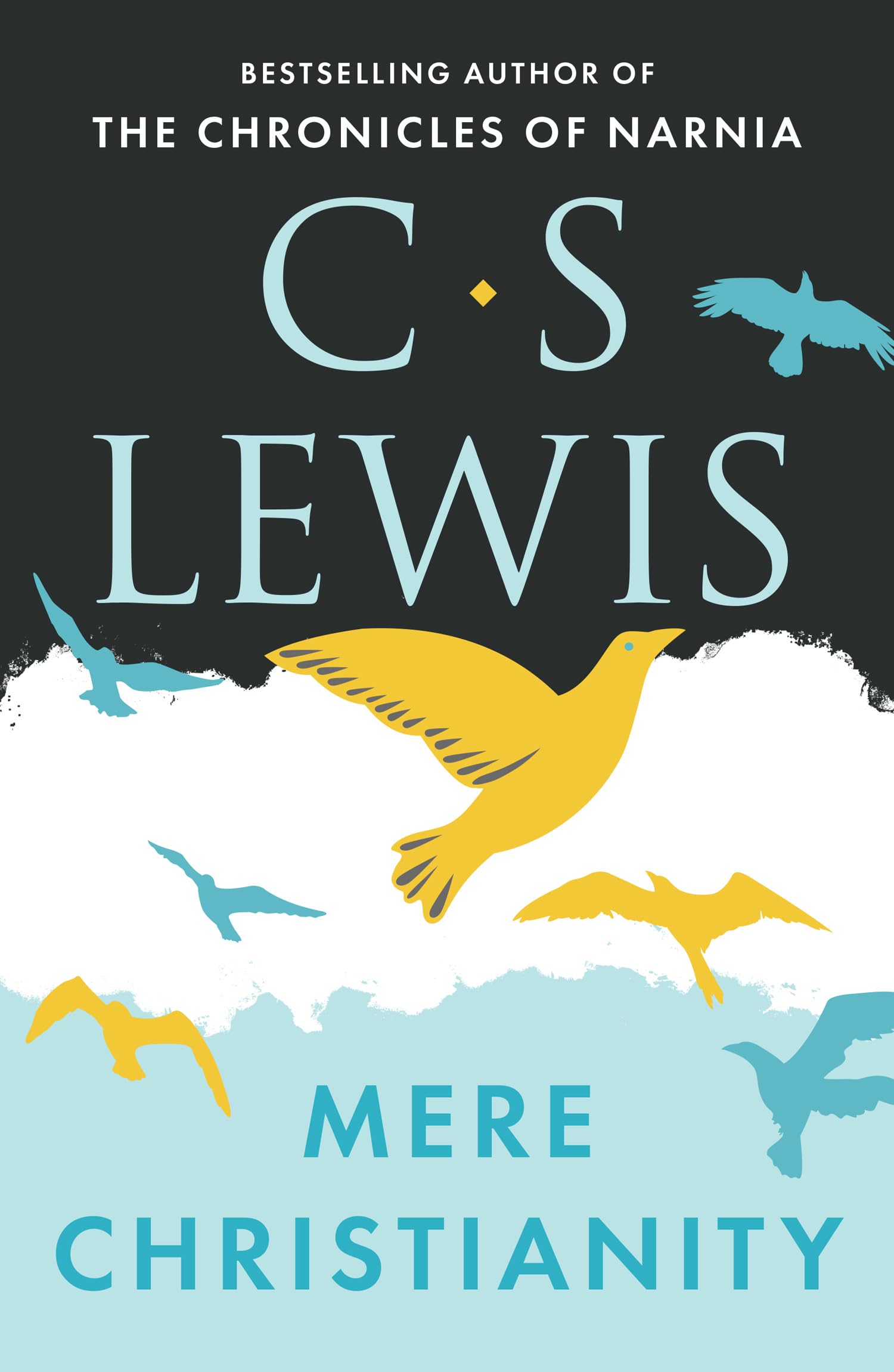
Mere Christianity
C. S. Lewis
Downtown Angels, summary:
Mere Christianity by C.S. Lewis is a timeless classic that explores the core beliefs common to all Christians, presenting them in a clear, logical, and accessible way. Originally adapted from a series of BBC radio talks during World War II, Lewis addresses the fundamentals of the Christian faith, including morality, the nature of God, and the meaning of life, without getting bogged down in denominational differences. His writing combines intellectual rigour with warmth and wit, inviting readers from all backgrounds to consider the reasonableness and beauty of Christianity.
Lewis’s ability to explain complex theological ideas with simple analogies and thoughtful arguments has made Mere Christianity one of the most influential Christian books of the 20th century. Whether you are a believer seeking to strengthen your faith or someone curious about what Christianity truly teaches, this book offers profound insights that challenge, inspire, and encourage a deeper understanding of what it means to follow Christ.
Please click on the link
https://amzn.to/4piozrk
To continue reading more uplifting articles from Downtown Angels, click the image below.
Christianity in Canada
A Legacy of Faith in a Changing Nation
Christianity in Canada has played a foundational role in shaping the nation’s history, values, and institutions. From early missionaries and settlers to the growth of churches across diverse regions, the Christian faith influenced education, healthcare, social justice, and community life. As Canada has evolved into a multicultural society, Christianity has also adapted, continuing to serve communities while addressing modern challenges with compassion and faith.
This legacy reflects resilience, service, and ongoing renewal in a changing nation. It shows how faith remains relevant by engaging culture with humility, hope, and purpose. If you’d like to explore how Christianity has shaped Canada’s past and continues to influence its present, simply click the image below to continue discovering this meaningful story of faith.
