
 My Testimony
Numbers 22
God Speaks Through the Unexpected: Balaam’s Donkey Revealed. A Transformative Call to Faith
By Neil McBride, Founder and CEO of Downtown Angels

Text Summary
The story of Balaam’s Donkey, found in Numbers 22, is a remarkable narrative that captures a profound moment of divine intervention, spiritual blindness, and unexpected revelation. It centres on Balaam, a prophet hired by Balak, the king of Moab, to curse the Israelites as they advance toward the Promised Land. Balak, fearful of Israel’s growing power and recent victories over neighbouring peoples, hopes that Balaam’s curse will weaken them and prevent their conquest of Moab.
As Balaam sets out on his journey to meet Balak, God appears to him with a clear command: he is only to say what God instructs. However, despite this divine direction, Balaam’s heart seems conflicted. He is willing to go with Balak’s messengers, possibly influenced by promises of reward and honour.
On the journey, a striking and supernatural event occurs. Balaam’s donkey suddenly refuses to move forward, turning off the path, pressing against a wall, and eventually lying down, much to Balaam’s frustration. Unbeknownst to Balaam, the donkey sees an angel of the Lord standing in the road with a drawn sword, blocking their way. Balaam, however, remains blind to the angel’s presence and beats the donkey to keep it moving.
God then opens the donkey’s mouth, and the animal speaks, questioning Balaam’s harsh treatment. This extraordinary moment shocks Balaam into realisation. Subsequently, God opens Balaam’s eyes, allowing him to see the angel himself. The angel reprimands Balaam for his reckless path and warns him to obey God’s command strictly.
This encounter underscores several important themes. It highlights the limits of human perception and the necessity of spiritual awareness, showing that even a prophet can be blind without God’s revelation. It also reveals God’s sovereignty—how He controls the events and outcomes to protect His people and ensure His will is done. The donkey’s role as an unexpected messenger demonstrates how God can use the most unlikely instruments to communicate truth and redirect His servants.
Ultimately, the story emphasizes obedience and faithfulness to God’s instructions, even when circumstances seem confusing or challenging. Balaam’s experience with his donkey serves as a powerful lesson about humility, spiritual insight, and the importance of listening to God’s voice above all else.
Context
The story of Balaam’s Donkey unfolds during a critical moment in Israel’s history—their wilderness wanderings after the Exodus, just before they cross the Jordan River into the Promised Land. At this time, the Israelites defeated powerful enemies, such as the Amorites, which caused great fear and anxiety among the surrounding nations, especially the Moabites. King Balak of Moab, alarmed by Israel’s growing numbers and military successes, seeks to counteract this threat not through open warfare alone but through spiritual means.
Balak’s strategy is to enlist the help of Balaam, a prophet or diviner known across the region for his ability to bless or curse nations. Balak hopes that Balaam’s curse will weaken Israel and protect Moab from defeat. However, this story quickly reveals the limitations of human schemes in the face of divine sovereignty. While Balaam initially seems willing to go along with Balak’s request—tempted by the promise of honour and reward—God’s control over the situation becomes evident. The narrative emphasises that no one can manipulate God’s will for personal gain or political advantage.
Moreover, the episode with Balaam’s donkey vividly illustrates the theme of spiritual blindness in contrast to divine revelation. Balaam, despite being a prophet, is unable to perceive the angel of the Lord standing in his path. Meanwhile, his donkey, an ordinary and seemingly insignificant animal, sees the angel and reacts accordingly. This role reversal challenges assumptions about spiritual authority and insight, reminding readers that true understanding comes from God’s intervention, not human position or status.
The story also introduces a tension within Balaam himself—his struggle between obedience to God and the allure of personal gain. Although he ultimately obeys God’s command to bless Israel rather than curse them (as seen in the following chapters), this narrative foreshadows his moral and spiritual conflicts.
In a broader biblical context, this episode serves as a powerful reminder of God’s sovereignty over nations and individuals alike. It demonstrates that God can use unexpected means—including a talking donkey—to fulfil His purposes and reveal spiritual truth. The story sets the stage for the unfolding drama of Israel’s conquest of Canaan, showing that their protection and success rest not in human power but in God’s providential care.
Numbers 22:1–2 – The Setting and Rising Tension
“Then the Israelites travelled to the plains of Moab and camped along the Jordan across from Jericho. Now Balak son of Zippor saw all that Israel had done to the Amorites.”
These verses set the stage for a dramatic and spiritually charged episode in Israel’s journey to the Promised Land. The Israelites have now reached the plains of Moab, located east of the Jordan River, directly across from the fortified city of Jericho. This location is strategically significant; Israel is on the threshold of Canaan, and their encampment marks the final staging ground before crossing the Jordan and initiating the conquest of the land promised to Abraham.
But this arrival does more than mark progress; it incites fear. Moab’s proximity to the defeated Amorites heightens the region’s anxiety. Israel had not only survived in the wilderness. Still, it had also triumphed in major military conflicts, including the defeat of King Sihon of the Amorites and King Og of Bashan (see Numbers 21). These victories were not merely military accomplishments—they demonstrated that the God of Israel was with them, and His power was not to be taken lightly.
Balak, the king of Moab and son of Zippor, takes particular notice. Though Israel has not threatened Moab directly (Deut. 2:9 later confirms God’s instruction not to harass Moab), Balak interprets their presence as a potential existential threat. His fear is not entirely irrational; in the ancient Near East, a victorious nomadic people moving en masse toward your borders was a clear sign of impending conflict, or worse, divine judgment.
This moment introduces one of the central tensions of the chapter: fear of Israel’s military success leads Moab’s leaders, especially Balak, to seek spiritual or supernatural means to counteract what they perceive as an unstoppable force. Rather than negotiate or seek peace, Balak turns to a foreign prophet, Balaam, hoping to manipulate the unseen realm through a curse. It’s an ancient act of desperation, rooted in the belief that blessings and curses had real power and that the gods could be swayed through ritual and sacrifice.
In this way, Numbers 22 begins not simply as a narrative about travel or political anxiety but as a theological confrontation. It raises key themes: Who holds spiritual authority? Can outsiders curse God’s people? And how does God respond when the nations try to resist His plan?
Numbers 22:3–6 – Fear, Manipulation, and the Call of Balaam
“Moab was terrified because there were so many people. Indeed, Moab was filled with dread because of the Israelites. The Moabites said to the elders of Midian, ‘This horde is going to lick up everything around us, as an ox licks up the grass of the field.’ So Balak son of Zippor, who was king of Moab at that time, sent messengers to summon Balaam son of Beor, who was at Pethor, near the River in his native land. Balak said: ‘A people has come out of Egypt; they cover the face of the land and have settled next to me. Now come and put a curse on these people, because they are too powerful for me. Perhaps then I will be able to defeat them and drive them out of the land. For I know that whoever you bless is blessed, and whoever you curse is cursed.’
The fear that grips Moab escalates into full-blown desperation. Israel’s sheer numbers—likely in the hundreds of thousands—are overwhelming. The text doesn’t just say Moab was afraid; it says they were terrified and filled with dread. The imagery used by the Moabites—“like an ox licking up the grass of the field”—is vivid and unsettling. It reflects a sense of being devoured, consumed without mercy, and utterly powerless to resist.
This fear leads King Balak to make an unusual move: instead of mobilising an army, he seeks supernatural intervention. Balak recognises that Israel’s strength may not be merely physical; it may be spiritual. Their victories over the Amorites suggest that a divine power supports them, and Balak knows that fighting such a force will require more than just military might.
Enter Balaam, son of Beor. Although not an Israelite, Balaam is widely recognised in the ancient world as a seer, a diviner—someone believed to possess spiritual authority and access to the divine. He lives in Pethor, near the Euphrates River (the “River” in this context), far to the northeast of Moab. This long-distance highlights the seriousness of Balak’s intent. Balaam’s reputation has reached distant lands, and Balak is willing to go to great lengths—and expense—to hire his services.
Balak’s request is telling: “Come and put a curse on these people… for I know that whoever you bless is blessed, and whoever you curse is cursed.” His words mirror God’s covenantal promise to Abraham in Genesis 12:3, but with a twist. While God declared that He would bless those who bless Israel and curse those who curse them, Balak now projects that kind of authority onto Balaam. He assumes that spiritual power can be harnessed and controlled for political ends. This is the heart of pagan divination: the belief that through the right rituals, payments, or words, the divine can be manipulated to serve human interests.
This sets the stage for a fundamental conflict: God’s sovereign will versus human attempts to control spiritual outcomes. Balak believes that Israel can be neutralised through cursing. He treats divine favour as a commodity to be bought. However, what follows in the narrative will reveal a deeper theological truth: God is not subject to the whims of men or the manipulations of sorcerers. His blessing upon Israel is irrevocable, and no curse can overturn it.
Thus, these verses introduce more than just the characters—they introduce the clash between divine sovereignty and human superstition, between true prophecy and transactional religion, and between the fear of man and the will of God.
Numbers 22:7–14 – Balaam’s First Response: Divine Interference
“The elders of Moab and Midian left, taking with them the fee for divination. When they came to Balaam, they told him what Balak had said. ‘Spend the night here,’ Balaam said to them, ‘and I will report back to you with the answer the LORD gives me.’ So the Moabite officials stayed with him. *God came to Balaam and asked, ‘Who are these men with you?’ Balaam said to God, ‘Balak son of Zippor, king of Moab, sent me this message: “A people that has come out of Egypt covers the face of the land. Now come and put a curse on them for me. Perhaps then I will be able to fight them and drive them away.”’ *But God said to Balaam, ‘Do not go with them. You must not put a curse on those people, because they are blessed.’ The next morning, Balaam got up and said to Balak’s officials, ‘Go back to your own country, for the LORD has refused to let me go with you.’
This passage deepens the spiritual conflict already hinted at in earlier verses. The delegation from Moab and Midian arrives bearing the “fee for divination”—an expected payment for a prophet or seer in ancient times. In other words, Balaam is being hired like a spiritual mercenary. This reinforces the pagan worldview at play: that spiritual power is transactional and can be bought if the price is right.
However, Balaam’s initial reply is unexpected. Rather than immediately accept or reject the offer, he asks the messengers to stay the night while he seeks the word of “the LORD”—Yahweh, Israel’s covenant God. This is surprising because Balaam is not an Israelite. Yet he recognises Yahweh as a legitimate spiritual authority—perhaps one among many in his polytheistic understanding—but someone he must consult.
Then, God intervenes directly. Yahweh appears to Balaam in the night and questions him: “Who are these men with you?” This is not because God lacks information—rather, as in the case of God’s question to Adam (“Where are you?” in Genesis 3:9), it serves as a probing invitation for reflection and response. God draws Balaam into a conversation that reveals not just the facts but Balaam’s heart and intentions.
Balaam honestly reports Balak’s message. But God is unequivocal in His response: “Do not go with them. You must not put a curse on those people because they are blessed.” Here, God declares a profound theological truth: what He has blessed cannot be cursed. His will is final, and no human prophet, regardless of reputation, can undo the divine blessing over Israel.
When Balaam relays this to the Moabite officials, his response is partially obedient but slightly ambiguous: “The LORD has refused to let me go with you.” It sounds obedient on the surface, but it subtly leaves room for interpretation, as if the issue were the messengers, not the mission itself. This phrasing suggests that the offer may still entice Balaam’s heart. He doesn’t say, “I will not go because it’s wrong,” but rather, “God won’t let me.” His desire to leave the door open will become more obvious in the next verses.
This section introduces an important spiritual theme: God’s Word is clear, but human hearts are often conflicted. Balaam has heard a direct and unmistakable “no” from God, yet the lure of wealth and recognition will test his allegiance. We begin to see a man caught between obedience to divine truth and the temptation of worldly reward, a theme that resonates far beyond Balaam’s time.
Numbers 22:15–21 – A Second Invitation, A Subtler Temptation
“Then Balak sent other officials, more numerous and more distinguished than the first. They came to Balaam and said: ‘This is what Balak son of Zippor says: Do not let anything keep you from coming to me, because I will reward you handsomely and do whatever you say. Come and put a curse on these people for me.’ But Balaam answered them, ‘Even if Balak gave me all the silver and gold in his palace, I could not do anything great or small to go beyond the command of the LORD my God. Now spend the night here so that I can find out what else the LORD will tell me.’ That night God came to Balaam and said, ‘Since these men have come to summon you, go with them, but do only what I tell you.’ Balaam got up in the morning, saddled his donkey and went with the Moabite officials.”
This section escalates both the stakes and the spirit of the tension. After Balaam initially refuses to go with the first delegation, Balak doesn’t back down. Instead, he doubles his efforts: he sends a more impressive and persuasive delegation with a clearer and richer offer. This time, there are more officials, and they are more distinguished. The language is deliberate—it suggests that Balak believes Balaam needs a better incentive.
And indeed, Balak’s message is more direct and more flattering: “Do not let anything keep you from coming to me.” He promises not just compensation but a great honour, wealth, and the ability to name his price. The temptation is now not only financial—it’s also personal and political. Balaam is being offered power, prestige, and influence.
To Balaam’s credit, he reaffirms his inability to “go against “the command of the LORD my God.” Notice the phrasing: “my God”—this suggests a deepening identification with Yahweh or at least a wdoesn’tess to acknowledge His authority. Balaam’s words seem pious: “Even if Balak gave me all the silver and gold in his palace…” But his actions don’t fully align. He again asks the visitors to stay the night while he inquires further from God.
This request is telling. God has already spoken clearly. He said, “Do not Balak ‘ sht them,” and “You must not curse the people,” for they are blessed (v. 12). Balaam is now seeking a second opinion—not because God might change, but because Balaam hasn’t fully accepted God’s answer. This is a subtle but common spiritual danger: appearing obedient on the outside while inwardly hoping God will permit what Balaam’s spirit desires.
That night, God speaks again—but His response is nuanced: “Go with them” but do only what I tell you.” This is not a reversal of His will but a concession to Balaam’s free will. Sometimes, when people are determined in their desires, “God allows them to walk a path that ultimately teaches them “lesson—often they don’t way. Later in the story, God’s anger will burn against Balaam (v. 22), precisely because his heart is not aligned with the divine purpose, even though his outward “d behaviour appears c “mplia” t.
Verse 21 shows Balaam waking early, saddling his “donkey, and setting out with the Moabite officials. The detail that he saddled his donkey himself—hasn’t been for a man of God’s status—suggests eagerness, even excitement. His heart is moving toward Moab—and toward compromise.
This passage is deeply relevant for anyone grappling with ambition, influence, or the desire to align personal agendas with God’s will. It challenges us to ask: Am I submitting to God’s clear voice, or am I trying to Balaamize His Word to suit my goals?
Numbers 22:22–27 – Divine Interruption: The Donkey Sees What Balaam Cannot
“But God was very angry when he went, and the angel of the LORD stood in the road to oppose him. Balaam was riding on his donkey, and his two servants were with him. When the donkey saw the angel of the LORD standing in the road with a drawn sword in his hand, it turned off the road into a field. Balaam beat it to get it back on the road.
Then the angel of the LORD stood in a narrow path through the vineyards, with walls on both sides.
When the donkey saw the angel of the LORD, it pressed close to the wall, crushing Balaam’s foot against it. So he beat the donkey again.
Then the angel of the LORD moved on ahead and stood in a narrow place where there was no room to turn, either to the right or to the left.
When the donkey saw the angel of the LORD, it lay down under Balaam, and he was angry and beat it with his staff.”
This passage marks a significant spiritual turning point in the narrative. Although God had just permitted Balaam to accompany the Moabite officials (v. 20), the next verse states that God was very angry when he went. This might seem contradictory, but it reveals a profound biblical truth: God sometimes permits things that He does not approve of. Balaam’s journey was technically allowed, but his heart’s motivation—to gain favour, wealth, and honour by cursing God’s people—was corrupt. So God intervenes.
The form of this intervention is both ironic and powerful: the Angel of the LORD—a visible, authoritative manifestation of God Himself—appears on the road with a drawn sword. This is not just a warning; it is a stance of judgment. Balaam, the so-called “seer,” is spiritually blind to the danger directly ahead of him. But the donkey sees.
This reversal is the heart of the drama: the prophet cannot see what the animal sees. The donkey, a lowly and often disregarded creature in ancient society, becomes the one with vision and discernment. Balaam, in contrast, is so focused on his journey and agenda that he’s oblivious to the divine presence opposing him.
Three times the donkey reacts to the Angel:
- First, it veers into a field to avoid the Angel, and Balaam responds by beating it.
- Second, it squeezes into a narrow vineyard path and crushes Balaam’s foot against a wall. He beats it again.
- Third, with nowhere else to go, the donkey collapses under him. And again, Balaam lashes out in anger.
This repetition is deliberate and symbolic. It mirrors a biblical pattern of threes used to reveal spiritual truths. The donkey’s actions are consistent and intelligent—it consistently tries to avoid harm. Balaam’s response, however, is consistent in its foolishness and violence. He cannot perceive that God is resisting him. His frustration and physical aggression contrast sharply with the patient obedience of the donkey.
This passage builds rich symbolism:
- The Donkey: A symbol of humility and unexpected insight. In a culture that devalues animals, especially donkeys, God uses the lowest creature to shame the proud prophet (see also 1 Cor. 1:27).
- The Angel with a Sword: A symbol of divine justice and authority. The sword is drawn, ready to strike. God is not passively watching—He is actively intervening.
- Balaam’s Blindness: A sobering picture of spiritual blindness. Despite being a prophet-for-hire, Balaam lacks the sensitivity to perceive God’s presence and warnings. His physical journey reflects his moral drift.
Numbers 22:28–31 – When the Donkey Speaks, the Prophet Listens
“Then the LORD opened the donkey’s mouth, and it said to Balaam, ‘What have I done to you to make you beat me these three times?’Balaam answered the donkey, ‘You have made a fool of me! If only I had a sword in my hand, I would kill you right now.’ The donkey said to Balaam, ‘Am I not your own donkey, which you have always ridden, to this day? Have I been in the habit of doing this to you?’ No,’ he said. Then the LORD opened Balaam’s eyes, and he saw the angel of the LORD standing in the road with his sword drawn. So he bowed low and fell facedown.”
1. The Lord Opens the Donkey’s Mouth
The moment is dramatic and deeply symbolic: God gives voice to a creature normally considered voiceless, overturning every expectation. This isn’t merely a miraculous moment for shock value; it’s a reversal of spiritual order. The one who should have insight is blind, and the one who shouldn’t speak becomes God’s mouthpiece.
The donkey asks a perfectly rational, even moral, question: “What have I done to you to make you beat me these three times?” The donkey appeals not just to facts but to its long-standing relationship with Balaam, gently pointing out that its behaviour has never been like this before. It asks, “Haven’t I always been reliable? Shouldn’t this strange behaviour make you think something unusual is happening?”
2. Balaam’s Response: Anger and Pride
Rather than being stunned that his donkey is speaking, Balaam answers back—a detail often noted for its comic absurdity. His frustration overrides his reason. “You have made a fool of me!” he yells, which reveals the real issue: pride. Balaam isn’t primarily concerned about what’s happening—he’s embarrassed, humiliated, and angry. He even says, “If only I had a sword… I would kill you!”—which is tragically ironic, considering an angel is standing in front of him with a sword, ready to strike him.
3. The Donkey’s Final Rebuke
The donkey, with calm logic, appeals again to its past faithfulness: “Have I been in the habit of doing this to you?” And Balaam has to admit: “No.” This confession, though brief, marks the beginning of a shift in the story. It shows that Balaam is now compelled to acknowledge that something beyond the ordinary is happening.
4. The Lord Opens Balaam’s Eyes
Finally, after the donkey’s speech, “the LORD opened Balaam’s eyes.” This parallels the earlier phrase, “the LORD opened the donkey’s mouth.” In both cases, God is the one who reveals truth, whether through voice or vision. Balaam sees the angel with the drawn sword and immediately falls face down in fear and reverence. The proud, spiritually blind prophet is brought low—not by a king or a curse, but by a humble donkey and the terrifying presence of God.
Key Themes and Takeaways:
- God speaks through the unexpected: A donkey becomes a messenger of divine truth. This reminds us that God often uses the lowly, the weak, and the overlooked to accomplish His purposes (cf. 1 Cor. 1:27, Luke 19:40).
- Spiritual blindness is real—even for religious people: Balaam is a prophet, yet his eyes are closed. His ambitions and pride prevent him from seeing God’s hand at work until God intervenes dramatically.
- God confronts spiritual compromise: Balaam is on a path of subtle rebellion—obeying God’s words outwardly but harbouring personal ambition and desire for reward. God confronts this duplicity in mercy, not by destroying Balaam outright, but by stopping him and forcing him to see the truth.
- The divine pattern of three: The donkey’s three responses to the angel mirror God’s persistent effort to block Balaam’s path. The repetition underscores God’s patience and Balaam’s stubbornness.
Numbers 22:32–35 – The Angel’s Rebuke and Balaam’s Renewed Obedience
“The angel of the LORD asked him, ‘Why have you beaten your donkey these three times? I have come here to oppose you because your path is a reckless one before me. The donkey saw me and turned away from me these three times. If it had not turned away, I would certainly have killed you by now, but I would have spared it.’Balaam said to the angel of the LORD, ‘I have sinned. I did not realize you were standing in the road to oppose me. Now if you are displeased, I will go back.’The angel of the LORD said to Balaam, ‘Go with the men, but speak only what I tell you.’ So Balaam went with Balak’s officials.
1. The Angel’s Rebuke: “Your path is a reckless one”
The angel’s question mirrors the donkey’s earlier words: “Why have you beaten your donkey?” In doing so, the angel confirms what we’ve already seen—Balaam is not just blind to spiritual truth; he’s misdirecting his anger toward the innocent.
But the core issue comes next: “Your path is a reckless one before me.” Some translations render this more sharply: “Your way is perverse” or “contrary.” The Hebrew implies more than just poor judgment—it suggests moral corruption or a twisted path. Balaam is outwardly complying with God’s instructions, but his internal motives—greed, ambition, self-importance—have placed him in opposition to God. The journey, although allowed by God, is spiritually perilous due to the heart behind it.
The angel then makes a chilling statement: “If [the donkey] had not turned away, I would certainly have killed you by now, but I would have spared it.” This underscores how close Balaam came to divine judgment. It also reinforces the donkey’s role as the true saviour in this episode. The lowest creature on the road had more spiritual sensitivity than the man God was using.
2. Balaam’s Confession: “I have sinned”
At last, Balaam confesses: “I have sinned.” While brief, this admission shows that the divine confrontation has finally broken through his spiritual pride. His recognition that “I did not realise you were standing in the road to oppose me” reflects not just physical blindness but spiritual dullness. Balaam offers to turn back—a sign of repentance—but God gives him another opportunity instead: to go forward, but under strict obedience.
3. God’s Command Repeated: “Speak only what I tell you”
God reaffirms the earlier command: “Go with the men, but speak only what I tell you.” This reinforces a key theme throughout the chapter: true spiritual authority does not stem from manipulation, wealth, or social status—it originates from hearing and obeying God’s word.
Balaam is allowed to continue, but he is now under divine restraint. He may still be a prophet-for-hire in the eyes of Balak, but in God’s eyes, he is on a leash. He will only speak what God permits, as will become dramatically clear in the chapters that follow when Balaam ends up blessing Israel instead of cursing them—repeatedly.
Themes and Reflections
- God is merciful even when we are misguided: Rather than destroying Balaam for his duplicity, God confronts and corrects him.
- Motives matter: Balaam’s path was “reckless” not because it disobeyed a command but because it betrayed a heart bent on gain.
- Spiritual insight requires humility: A donkey saw the angel before the prophet did—a humbling and unforgettable reminder that God’s truth is revealed to the humble, not the proud.
- Obedience is non-negotiable: God allows Balaam to go forward only under strict instruction. The prophet may speak, but he may not freelance. He is a mouthpiece, not a master.
1. The Angel’s Rebuke: “Your path is a reckless one”
The angel’s question mirrors the donkey’s earlier words: “Why have you beaten your donkey?” In doing so, the angel confirms what we’ve already seen—Balaam is not just blind to spiritual truth; he’s misdirecting his anger toward the innocent.
But the core issue comes next: “Your path is a reckless one before me.” Some translations render this more sharply: “Your way is perverse” or “contrary.” The Hebrew implies more than just poor judgment—it suggests moral corruption or a twisted path. Balaam is outwardly complying with God’s instructions, but his internal motives—greed, ambition, self-importance—have placed him in opposition to God. The journey, although allowed by God, is spiritually perilous due to the heart behind it.
The angel then makes a chilling statement: “If [the donkey] had not turned away, I would certainly have killed you by now, but I would have spared it.” This underscores how close Balaam came to divine judgment. It also reinforces the donkey’s role as the true saviour in this episode. The lowest creature on the road had more spiritual sensitivity than the man God was using.
2. Balaam’s Confession: “I have sinned”
At last, Balaam confesses: “I have sinned.” While brief, this admission shows that the divine confrontation has finally broken through his spiritual pride. His recognition that “I did not realise you were standing in the road to oppose me” reflects not just physical blindness but spiritual dullness. Balaam offers to turn back—a sign of repentance—but God gives him another opportunity instead: to go forward, but under strict obedience.
3. God’s Command Repeated: “Speak only what I tell you”
God reaffirms the earlier command: “Go with the men, but speak only what I tell you.” This reinforces a key theme throughout the chapter: true spiritual authority does not stem from manipulation, wealth, or social status—it originates from hearing and obeying God’s word.
Balaam is allowed to continue, but he is now under divine restraint. He may still be a prophet-for-hire in the eyes of Balak, but in God’s eyes, he is on a leash. He will only speak what God permits, as will become dramatically clear in the chapters that follow when Balaam ends up blessing Israel instead of cursing them repeatedly.
Themes and Reflections
- God is merciful even when we are misguided: Rather than destroying Balaam for his duplicity, God confronts and corrects him.
- Motives matter: Balaam’s path was “reckless” not because it disobeyed a command but because it betrayed a heart bent on gain.
- Spiritual insight requires humility: A donkey saw the angel before the prophet did—a humbling and unforgettable reminder that God’s truth is revealed to the humble, not the proud.
- Obedience is non-negotiable: God allows Balaam to go forward only under strict instruction. The prophet may speak, but he may not freelance. He is a mouthpiece, not a master.

L
Mere Christianity
C. S. Lewis
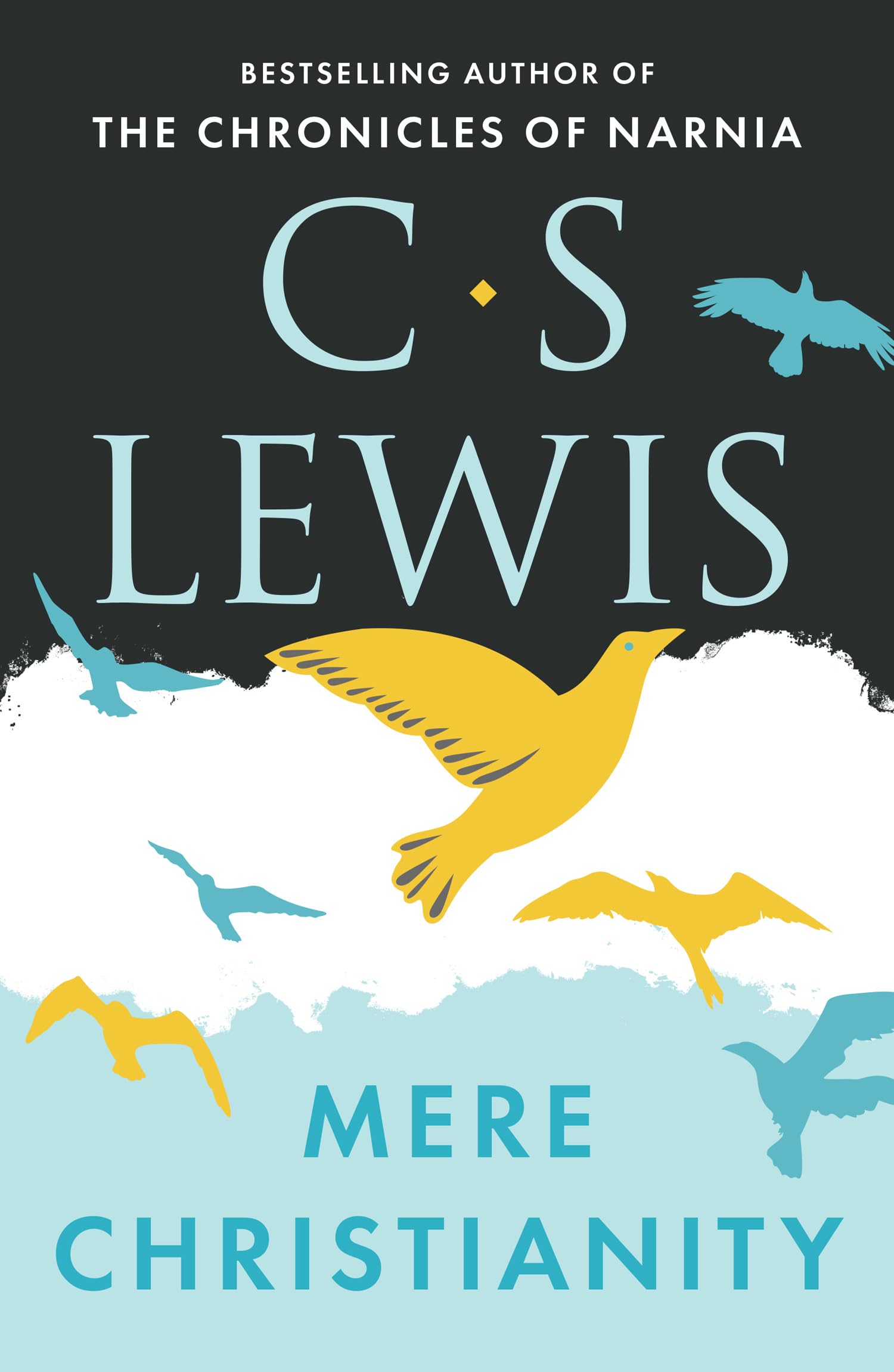
Downtown Angels, summary:
Mere Christianity by C.S. Lewis is a timeless classic that explores the core beliefs common to all Christians, presenting them in a clear, logical, and accessible way. Originally adapted from a series of BBC radio talks during World War II, Lewis addresses the fundamentals of the Christian faith, including morality, the nature of God, and the meaning of life, without getting bogged down in denominational differences. His writing combines intellectual rigour with warmth and wit, inviting readers from all backgrounds to consider the reasonableness and beauty of Christianity.
Lewis’s ability to explain complex theological ideas with simple analogies and thoughtful arguments has made Mere Christianity one of the most influential Christian books of the 20th century. Whether you are a believer seeking to strengthen your faith or someone curious about what Christianity truly teaches, this book offers profound insights that challenge, inspire, and encourage a deeper understanding of what it means to follow Christ.
Please click on the link
https://amzn.to/4piozrk
Deep Roots Strong Faith
Dr Rebecca Amos

Downtown Angels, summary:
In Deep Roots Strong Faith, Dr. Rebecca Amos beautifully illustrates how a robust and enduring faith begins with cultivating deep spiritual roots. She emphasises that just like a tree needs strong roots to withstand storms, believers must develop a solid foundation in God’s Word, prayer, and community to remain steadfast in their faith during life’s challenges. Dr. Amos encourages readers to nurture their relationship with God intentionally, allowing their faith to grow strong and resilient over time, enabling them to face trials with confidence and hope.
Dr. Amos also highlights that deep roots in faith foster not only personal growth but also the ability to impact others positively. A strong, well-grounded believer becomes a source of encouragement, wisdom, and stability within their community. Through practical insights and heartfelt encouragement, Deep Roots, Strong Faith invites readers to embark on a lifelong journey of spiritual growth, rooted in trust, grounded in Scripture, and flourishing in the grace and power of God.
Please click on the link
https://amzn.to/3XRBHHX
o.
To continue reading more uplifting articles from Downtown Angels, click the image below.
2 Kings 4
Elisha and The Widow’s Oil: A Miracle of Unstoppable Provision
In 2 Kings 4, we witness a powerful display of God’s provision through the prophet Elisha. When a widow faced the threat of losing her children to debt slavery, Elisha instructed her to gather jars and pour out the little oil she had. Miraculously, the oil kept flowing until every jar was filled, providing enough to save her family and repay her debts. This story highlights God’s abundant and unstoppable provision for those who trust Him, showing that even in desperate circumstances, He is faithful to provide.
The miracle of the widow’s oil reminds believers that God’s resources are limitless and His timing is perfect. It encourages faith, obedience, and reliance on His guidance, demonstrating that no situation is beyond His power to transform. If you’re inspired by stories of divine provision and miraculous intervention, click the image below to continue exploring the life and miracles of Elisha.
