
 My Testimony
Jesus
The Glorious and Mighty Lamb Without Blemish, Prophecy in the Old Testament
By Neil McBride, Founder and CEO of Downtown Angels

Old Testament Foundations: The Passover Lamb as a Symbol of Redemption
The first and perhaps most profound introduction of the Lamb without blemish appears in the book of Exodus, setting a foundational precedent for understanding God’s plan of salvation. As God prepares to deliver His people, the Israelites, from centuries of brutal slavery in Egypt, institute a divine ordinance centred around the sacrifice of a perfect lamb. God commands the Israelites to select a lamb without defect, a male of the first year, to be sacrificed during the inaugural Passover event:
“Your Lamb shall be without blemish, a male of the first year: ye shall take it out from the sheep or goats. And ye shall keep it up until the fourteenth day of the same month: and the whole assembly of the congregation of Israel shall kill it in the evening.” (Exodus 12:5-6)
The Significance of an Unblemished Lamb
This Lamb was not just any ordinary animal, it had to be perfect, sinless, and free from any physical defect. This requirement was not simply about outward appearance; it reflected the sacred nature of the offering and pointed to the holiness of God, who demanded purity in the sacrifices made to Him. In ancient Near Eastern culture, an offering with flaws would be seen as unacceptable and disrespectful; however, here, the standard was even higher because God is holy and just.
The Israelites were instructed to take the Lamb and keep it carefully until the appointed time when the entire community would gather to kill it. The Lamb’s blood was then to be smeared on the doorposts and lintels of each Israelite home. This act of marking the doorposts with the Lamb’s blood was a crucial element of obedience and faith. It served as a visible sign to the angel of death to “pass over” those homes during the final and most devastating plague in Egypt, the death of the firstborn (Exodus 12:7,13). This blood acted as a divine shield, sparing the Israelites from judgment and destruction.
The Passover Lamb and God’s Deliverance
The Passover lamb is deeply significant because it not only spared physical death but also marked the liberation of God’s people from the bondage of slavery. The event was the pivotal moment when God decisively intervened in history, demonstrating His power over Egypt’s gods and Pharaoh’s tyranny. It inaugurated Israel’s journey toward the Promised Land and its identity as God’s chosen people.
This act of salvation by the blood of an unblemished lamb established a theological foundation for understanding the nature of redemption itself. It taught the Israelites that life is protected and secured through sacrifice and that God requires purity and holiness as a condition for deliverance.
The Passover Lamb as a Prophetic Type of Jesus Christ
The significance of the Passover lamb extends far beyond its immediate historical context in Egypt. The Lamb is a prophetic type, or a divinely ordained foreshadowing, of the ultimate Lamb of God, who would come centuries later in the person of Jesus Christ. The New Testament explicitly connects Jesus to this imagery, with John the Baptist proclaiming:
“Behold the Lamb of God, which taketh away the sin of the world.” (John 1:29)
Jesus is revealed as the perfect, sinless Lamb who offers His blood for the eternal salvation of all humanity. The symbolism of the Lamb without blemish underscores the necessity of a pure and spotless sacrifice, one who is without sin and fully acceptable to God.
Substitutionary Atonement and Redemptive Deliverance
The unblemished nature of the Passover lamb points directly to the sinlessness of Jesus Christ. Just as the Lamb in Egypt stood in place of the firstborn of Israel, bearing the threat of death so that God’s people might live, Jesus stands as the substitute for sinful humanity. He bore the full penalty of sin, death and separation from God so that we might be freed from spiritual slavery and receive eternal life.
This concept is known as substitutionary atonement, meaning Jesus Christ took our place and suffered the consequences of our sins. The Lamb’s blood, which protected the Israelites from physical death, prophetically points to Christ’s blood, which protects believers from eternal death.
The Lamb as a Symbol of Salvation
The Passover lamb is a powerful symbol of redemptive deliverance, illustrating that salvation is not earned through human effort but is granted by God’s grace through perfect sacrifice. This theme echoes throughout the Bible and finds its ultimate fulfilment in Jesus Christ. His sacrifice is not a one-time, temporary ritual but a once-and-for-all atonement that fully satisfies divine justice.
Additionally, the Passover event was an annual commemoration for Israel, reminding them continually of God’s mercy and faithfulness. Similarly, Christians celebrate the Lord’s Supper (also known as Communion) as a remembrance of Christ, the true Lamb of God, who was sacrificed to bring about salvation.
Theological Implications for Believers Today
For believers today, the significance of the Passover lamb calls us to reflect on the holiness and justice of God, the seriousness of sin, and the profound love and mercy revealed through Christ’s sacrifice. The Lamb without blemish sets a high standard; Jesus perfectly fulfils this as the sinless Lamb who willingly died in our place.
This imagery reassures believers that salvation is secured through Christ’s blood and invites us to live lives marked by purity and gratitude. Just as the Israelites were called to act in faith and obedience by applying the blood of the Lamb, Christians are called to place their faith in Jesus, the perfect Lamb, and live in the freedom that His sacrifice provides.
The Concept of a Perfect Sacrifice in Leviticus: Holiness and Atonement
The theme of the unblemished sacrifice is a critical and recurring motif throughout the Levitical sacrificial system, which forms the heart of Israel’s worship and approach to God in the Old Testament. The book of Leviticus is not just a manual for religious rituals; it is a profound theological treatise emphasising God’s absolute holiness and the grave seriousness of sin. These truths are embodied in the strict requirements for the offerings made to God.
One of the fundamental stipulations in Leviticus is that only animals without defects or blemishes were acceptable as sacrifices. This is explicitly stated in the law concerning burnt offerings:
“If his offering is of the flocks, sheep, or goats, for a burnt sacrifice, he shall bring it a male without blemish.” ( Leviticus 1:10)
This requirement was not an arbitrary rule but a divine standard that communicated several important spiritual realities.
The Holiness of God and the Need for Purity
The insistence on an unblemished, perfect animal for sacrifice underscores the inviolable holiness of God. God’s holiness is not merely moral perfection but His absolute otherness; he is set apart from all creation in purity and righteousness. Because of this, anything that approaches Him must also reflect a standard of purity. The blemished or defective sacrifices would symbolise impurity, imperfection, or sin, which cannot approach a holy God.
The sacrificial animal thus represented more than a physical offering; it was a symbolic substitute for the worshiper’s moral and spiritual condition. By offering a flawless lamb or goat, the worshiper acknowledged that they were imperfect, sinful, and in need of reconciliation and cleansing to stand before God.
Substitution and Atonement
The animal’s role as a substitute was central to the sacrificial system. The person offering the sacrifice confessed their sins and shortcomings, transferring the guilt and penalty symbolically onto the innocent animal. This act of substitution is an early and profound expression of the principle of atonement, which involves the restoration of a broken relationship between God and humanity.
The blood of the animal, poured out on the altar, symbolised the cost of sin and the necessity of life being given to cover or “atone” for transgressions (Leviticus 17:11). The unblemished nature of the sacrifice was necessary because only a pure and perfect substitute could adequately represent the sinner before God’s judgment.
Temporary and Incomplete: The Limitations of Old Testament Sacrifices
Despite the rich symbolism and divine purpose of the Levitical sacrifices, the Old Testament system was ultimately temporary and incomplete in its ability to provide true and lasting redemption. The sacrificial rituals pointed forward to something greater, a perfect sacrifice that would fully and finally deal with sin.
The Epistle to the Hebrews highlights this limitation:
“For it is not possible that the blood of bulls and goats should take away sins.” (Hebrews 10:4)
This verse reveals the fundamental truth that animal sacrifices, no matter how carefully observed or repeatedly offered, cannot permanently cleanse humanity from the stain of sin. They served as types and shadows—symbolic acts that foreshadowed the coming of the true and ultimate sacrifice.
The Repeated Nature of the Sacrifices
The Levitical system’s repetitive sacrifices reflected the ongoing reality of sin. The priests had to continually offer animal sacrifices daily, weekly, and yearly (such as on the Day of Atonement) because the sins of the people continued unabated. The continual bloodshed underscored that these offerings were insufficient for eternal forgiveness; they could only temporarily cover sin.
This ongoing cycle demonstrated that sin was not eradicated by these sacrifices but only deferred or managed. The altar of sacrifice was a place of ongoing reminder and confession rather than a permanent solution.
The Awaited Perfect Sacrifice: The Lamb Without Blemish
The Old Testament sacrificial system anticipated the arrival of a perfect, unblemished Lamb —the Messiah, who would offer Himself as a once-for-all sacrifice for sin. This Lamb would not only meet God’s demand for purity and holiness but would also satisfy divine justice fully and eternally.
Jesus Christ fulfils this role perfectly. His sinlessness and perfection qualify Him as the true Lamb without blemish (1 Peter 1:19). Unlike the animals of Leviticus, Christ’s sacrifice was:
- Once and for all (Hebrews 10:10), requiring no repetition,
- It is sufficient to remove sin entirely, not just cover it,
- Accepted by God, who raised Him from the dead as a sign of the effectiveness of His atonement (Romans 4:25).
Justice and Mercy Harmonised
The need for a perfect sacrifice highlights the justice of God; sin must be dealt with appropriately because God’s nature cannot tolerate sin. However, the unblemished Lamb also reveals God’s mercy and love; He provides a perfect substitute to bear the penalty of sin in humanity’s place.
This harmonisation of justice and mercy is at the very heart of the gospel message, and it finds its clearest expression in the sacrifice of Jesus, the Lamb of God.
Isaiah’s Prophecy of the Suffering Servant: The Lamb Led to the Slaughter
The prophetic vision of the Lamb without blemish reaches a profound and poignant climax in Isaiah 53, one of the most powerful and detailed Messianic prophecies in the entire Bible. Known as the “Song of the Suffering Servant,” this chapter foretells the mission, suffering, and ultimate triumph of a mysterious figure—God’s Servant—who would suffer not for His wrongdoing but for the sins of others. This Servant is described in strikingly sacrificial terms, most notably as a lamb led to the slaughter.
“He was oppressed, and he was afflicted, yet he opened not his mouth: He is brought as a lamb to the slaughter, and as a sheep, before her shearers are dumb,bso he openeth not his mouth.” (Isaiah 53:7, KJV)
The Lamb’s Silent Submission
The use of lamb imagery in this passage is deeply significant. Lambs, by nature, are gentle, innocent, and vulnerable. In the ancient sacrificial system, they were chosen for their purity and meekness. To describe the Servant of the Lord in such terms immediately signals that He is being offered as a sacrifice, not just symbolically, but literally, on behalf of others.
The Servant’s silence in suffering mirrors the Lamb, who does not resist the slaughter. This reflects the willing submission of Jesus Christ during His trial, crucifixion, and death. In the New Testament, we see Christ standing silently before Pilate, offering no self-defence against false accusations (Matthew 27:12–14). This echoes Isaiah’s prophecy and reinforces that His suffering was not forced upon Him but willingly accepted as part of God’s divine plan.
The Depth of the Lamb’s Sacrifice
The true magnitude of the Suffering Servant’s mission is unveiled in Isaiah 53:5, one of the most theologically rich verses in all of Scripture:
“But he was wounded for our transgressions, he was bruised for our iniquities:the chastisement of our peace was upon him; and with his stripes, we are healed.” (Isaiah 53:5, KJV)
This verse underscores the substitutionary nature of the Servant’s suffering. He did not suffer for His sins—for He had none—but for our transgressions and our iniquities. Every aspect of His pain was purposeful:
- “Wounded for our transgressions” points to the physical suffering and piercing that Christ endured on the cross.
- “Bruised for our iniquities” speaks to the deep, crushing weight of sin He bore on our behalf.
- “Chastisement of our peace” signifies that He took upon Himself the punishment we deserved to make peace between sinful man and holy God.
- “With His stripes, we are healed” reveals that through His scourging, we receive spiritual healing, forgiveness, and restoration.
Jesus as the Fulfillment of Isaiah’s Prophecy
Isaiah’s portrayal of the Suffering Servant finds its complete fulfilment in Jesus Christ, the Lamb of God who takes away the sin of the world (John 1:29). The New Testament writers explicitly connect Jesus to Isaiah 53. For instance:
- Matthew 8:17 references Isaiah 53 to explain Jesus’ healing ministry:
- “That it might be fulfilled which was spoken by Esaias the prophet, saying, Himself took our infirmities, and bare our sicknesses.”
- Acts 8:32–35 recounts the story of Philip and the Ethiopian eunuch. When the eunuch reads Isaiah 53:7–8, he asks Philip, “Who is the passage about?” Philip responds by preaching that Jesus is the fulfilment of this prophecy.
- 1 Peter 2:24–25 also quotes Isaiah 53 directly:
- “Who his self bare our sins in his own body on the tree… by whose stripes ye were healed.”
These New Testament references confirm that the early Church clearly understood Isaiah 53 to be a direct prophecy of Jesus’ crucifixion and atoning work. His suffering and death were not accidents of history but the divinely ordained means of redemption.
Theological Significance: Atonement and Redemption
The picture of the Suffering Servant as a lamb led to the slaughter captures the essence of atonement theology. In ancient Israel, the sacrificial Lamb bore the sins of the people as a substitute. Through Isaiah’s prophecy, God reveals that He would one day provide a greater Lamb—a sinless and perfect Lamb who would carry not only the sins of Israel but of the whole world.
Jesus’ sacrifice meets every requirement of Isaiah’s Servant:
- He was innocent and without blemish, fulfilling the prophetic requirement of sinlessness.
- He suffered willingly and silently, as described in Isaiah.
- He bore the iniquities of others, not for His crimes.
- He became the means of peace, reconciling humanity to God through His death.
The Servant’s death was not just a tragic event; it was a divine transaction, where the righteousness of Christ is given to sinners in exchange for their guilt.
Hope Through the Suffering Lamb
Isaiah does not end the prophecy in despair. The latter part of Isaiah 53 (verses 10–12) reveals that the Servant will ultimately be vindicated:
“He shall see his seed, he shall prolong his days, and the pleasure of the LORD shall prosper in his hand.” (Isaiah 53:10)
This hints at the resurrection of the Suffering Servant. Though He dies, He will live again, and His sacrifice will produce fruit, a people redeemed, a spiritual family born through His suffering. This corresponds perfectly with Jesus’ resurrection and the birth of the Church.
Summary: The Lamb of Isaiah and the Cross of Christ
Isaiah’s prophecy of the Suffering Servant gives us one of the most vivid, heartbreaking, and hopeful portraits of the Messiah as the Lamb without blemish. In Christ, this prophecy finds its ultimate fulfilment:
- He is the Lamb who led to the slaughter.
- He is the One who bore our sins.
- He is the Servant who suffered willingly.
- He is the Savior who rose again to bring healing, peace, and eternal life.
Isaiah 53 stands as a timeless testimony to the redemptive work of God through His Son. It invites all people to see the suffering of Christ not as a tragedy but as the triumphant expression of divine love. The Lamb who was led to the slaughter is now the risen King, calling all to believe in His name and receive the healing brought by His stripes.
The New Testament Fulfillment: Jesus as the Lamb of God
In the New Testament, the imagery of the Lamb without blemish reaches its fullest realization in Jesus Christ, who is identified as the Lamb of God—the ultimate fulfilment of the sacrificial system and the prophetic visions of the Old Testament.
John the Baptist’s Proclamation
The first explicit declaration of Jesus as the Lamb of God occurs when John the Baptist sees Jesus approaching and exclaims:
“Behold the Lamb of God, which taketh away the sin of the world.” (John 1:29)
This proclamation identifies Jesus as the perfect sacrifice, not only for Israel but for the entire world. The title “Lamb of God” signifies Jesus’ role as the atoning sacrifice who takes away the sins of humanity. This declaration underscores the universality of His mission and the sufficiency of His sacrifice for all who believe in Him.
The Final and Perfect Sacrifice
The need for ongoing animal sacrifices ended with Jesus, whose one offering of Himself was sufficient to secure eternal redemption:
“But this man, after he had offered one sacrifice for sins forever, sat down on the right hand of God.” (Hebrews 10:12)
This verse emphasizes the finality and completeness of Jesus’ sacrifice. Unlike the repeated animal sacrifices of the Old Testament, Jesus’ offering was, once and for all, securing eternal redemption for those who trust in Him.
The Precious Blood of the Lamb Without Blemish
The Apostle Peter reinforces the sinless nature and redemptive power of Christ’s sacrifice:
“But with the precious blood of Christ, as of a lamb without blemish and spot.” (1 Peter 1:18-19)
Jesus’s sinlessness was essential to His role as the Lamb who could bear the sins of the world. The unblemished Lamb took our place, offering His perfect life in exchange for our salvation, satisfying God’s justice and opening the way for reconciliation.
The Lamb in Revelation: Triumphant and Reigning in Glory
The final biblical vision of the Lamb appears in the book of Revelation, where the once-slain Lamb is now gloriously exalted and reigning in victory. The Apostle John’s vision reveals:
“Then I looked, and behold, the Lamb standing on Mount Zion, and with him a hundred forty and four thousand, having his Father’s name written in their foreheads.” (Revelation 14:1)
Here, the Lamb is no longer the silent suffering servant but the triumphant King. Because of His victory over sin and death, the Lamb is worthy of worship and praise forever:
“Worthy is the Lamb that was slain to receive power, and riches, and wisdom, and strength, and honour, and glory, and blessing.” (Revelation 5:12)
This vision assures believers of the final restoration of all things under the Lamb’s sovereign reign. The blood once poured out for salvation has secured eternal life for all who trust in Him.
The Lamb and the 144,000 on Mount Zion
In Revelation 14, the Lamb is depicted standing on Mount Zion with the 144,000 who have His name and the name of His Father written on their foreheads. This imagery signifies:
- Divine Ownership and Protection: The marking of the foreheads symbolizes divine ownership and protection, indicating that these individuals belong to God and are under His care.
- Purity and Faithfulness: The 144,000 are described as having not defiled themselves with women, symbolizing spiritual purity and faithfulness to God. They follow the Lamb wherever He goes, indicating their unwavering commitment to Christ.
- Redemption and First fruits: They have been redeemed from among men as the first fruits to God and the Lamb, highlighting their special status as the first to be saved and set apart for God’s purposes.
This scene underscores the ultimate triumph of Christ and the faithfulness of His redeemed people, serving as an encouragement to believers to remain steadfast in their faith, pursue holiness, and anticipate the fulfilment of God’s promises in the eschatological future.
Conclusion: The Lamb Without Blemish — God’s Eternal Plan for Redemption
The powerful imagery of the Lamb without blemish threads through Scripture from Genesis to Revelation, providing a clear and unified picture of God’s redemptive work. Beginning with the Passover lamb in Egypt, continuing through the Levitical sacrifices, unfolding in the prophetic suffering servant of Isaiah, fulfilled perfectly in Jesus Christ, and culminating in the victorious Lamb reigning in glory—this motif reveals God’s eternal solution to humanity’s greatest need:
- Redemption from sin and death: Through Jesus’ sacrificial death, believers are freed from the penalty of sin and granted eternal life.
- Reconciliation with a holy God: Jesus’ atoning sacrifice bridges the gap between sinful humanity and a holy God, restoring fellowship.
- Access to eternal life through faith: By trusting in Jesus as the Lamb of God, individuals receive the gift of eternal life.
The path to salvation is now open to all who believe in Christ, the Lamb without blemish, the once-for-all sacrifice who bore our sins and conquered death. This profound biblical imagery encapsulates the cost of grace, the depth of divine love, and the hope of a restored relationship with God.

100 Fulfilled Bible Prophecies
by Ray Konig and George Konig
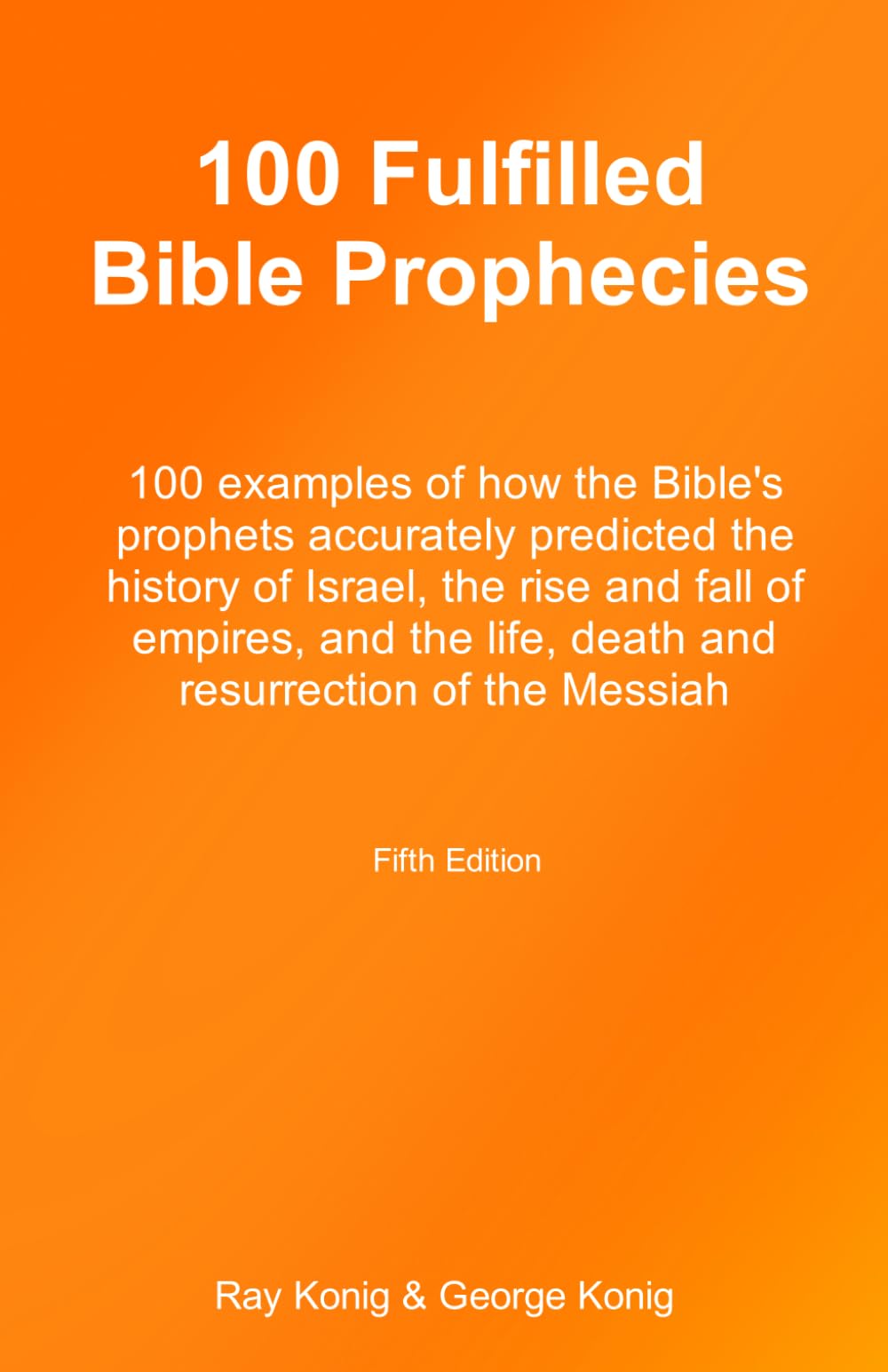
Downtown Angels, summary:
100 Fulfilled Bible Prophecies by Ray Konig and George Konig is a well-researched and accessible guide that explores how specific biblical prophecies have come to pass with remarkable accuracy. Focusing primarily on Old Testament predictions and their fulfilment in the New Testament—particularly through the life, death, and resurrection of Jesus Christ—the book presents 100 clear examples that demonstrate the Bible’s prophetic integrity. Each prophecy is paired with its corresponding fulfilment and includes scriptural references and historical context, making it easy for readers to follow and reflect on the consistency of God’s plan.
Written with clarity and a journalistic eye for detail, the authors aim to strengthen faith and provide compelling evidence for Scripture’s divine inspiration. Ray Konig, a former journalist, and his father, George Konig, a Christian writer and web publisher, combine their skills to create a concise yet powerful resource for believers, seekers, and sceptics alike. 100 Fulfilled Bible Prophecies not only reinforces the reliability of the Bible but also points readers toward the central message of Scripture: God’s faithfulness to His promises, fully realised in the person of Jesus the Messiah.
Please click on the link
Does The Jewish Bible Point To Jesus?: 12 Key Prophecies That Unfold God’s Plan
By David Brickner
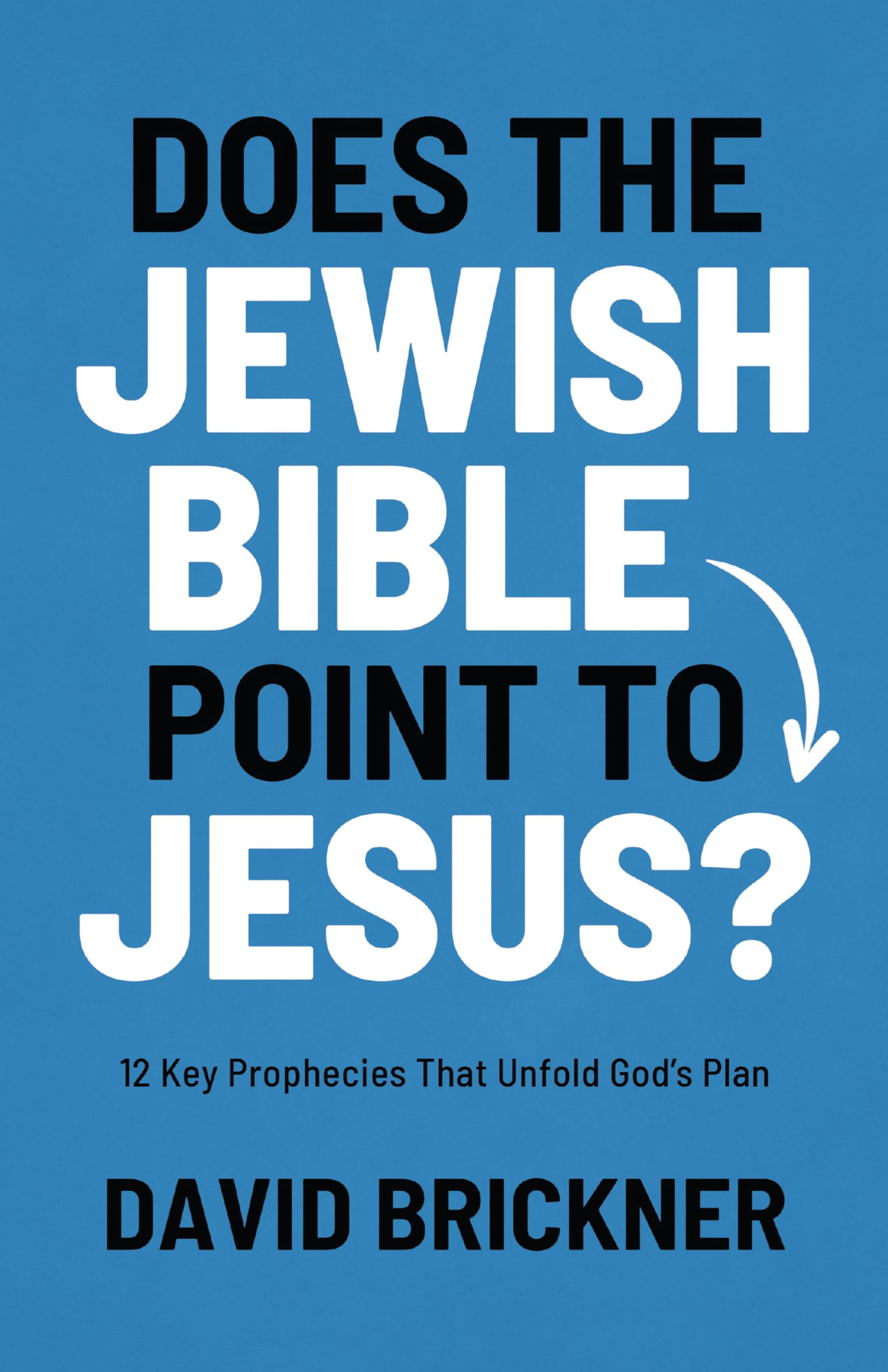
Downtown Angels, summary:
Does The Jewish Bible Point to Jesus?: 12 Key Prophecies That Unfold God’s Plan is an insightful guide that explores how key passages in the Hebrew Bible (Tanakh) point forward to the coming of Jesus as the Messiah. Through a careful examination of 12 foundational prophecies, this book highlights God’s unfolding plan of redemption, which begins in the Old Testament and finds its fulfilment in the New Testament. Each prophecy is explored in its original Jewish context, showing how the writings of Moses, the prophets, and the psalmists all anticipate a future deliverer.
From the Promised Seed in Genesis to the suffering servant in Isaiah 53, the virgin birth in Isaiah 7:14, and the Messianic King in Micah 5:2, these prophecies form a cohesive narrative that reveals God’s intention to redeem humanity through the Messiah. By connecting these ancient texts to their fulfilment in the life, ministry, and resurrection of Jesus, the book invites both Jewish and Christian readers to consider the continuity and unity of Scripture. Does The Jewish Bible Point to Jesus? It presents a compelling case that Israel’s hope is ultimately realised in Christ, encouraging a deeper faith and a renewed understanding of God’s eternal plan.
Please click on the link
To continue reading more uplifting articles from Downtown Angels, click the image below.
The Messiah
Born of a Woman, God’s Unstoppable Promise
From the earliest chapters of Scripture, God promised a Saviour—a Messiah who would come to redeem humanity and restore creation. Born of a woman, this promised King fulfilled God’s covenant in ways that no one could have imagined, bringing hope to a fallen world. Prophets foretold His life, ministry, and ultimate sacrifice, revealing a plan that could not be thwarted by time, circumstance, or human opposition. The birth of the Messiah marked the beginning of God’s unstoppable work of redemption, transforming history and offering salvation to all who believe.
The Messiah’s life and mission continue to inspire awe, faith, and worship among believers worldwide. His coming demonstrates God’s perfect timing, unwavering faithfulness, and the power of His promises. Every detail, from prophecy to fulfilment, reveals a God who is both sovereign and loving. If you’re captivated by the story of God’s ultimate promise and the fulfilment of His plan, click the image below to continue exploring the miraculous journey of the Messiah.
