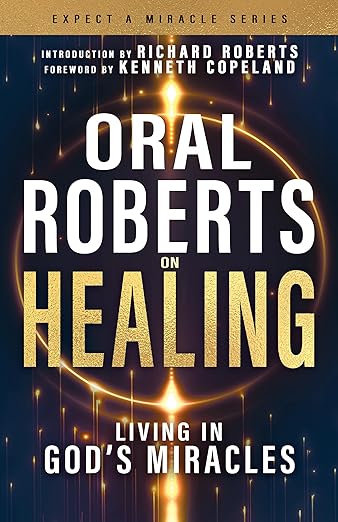
Introduction: A Visionary Who Transformed American Christianity
Oral Roberts remains one of the most impactful figures in twentieth-century Christianity, a man whose ministry revolutionised evangelism, healing, and religious broadcasting. A pioneer of mass crusades, television ministry, and charismatic faith teaching, Roberts helped shape the landscape of modern American Christianity, a legacy still evident today. His name evokes images of packed revival tents, miracle crusades, prayer lines, and the bold declaration that God desires His people to be whole spiritually, emotionally, and physically. While opinions about Roberts often vary, his influence on Pentecostalism, the healing revival movement, and global Christian media is undeniable.
His life story is a remarkable account of overcoming poverty, illness, and personal struggle to become one of the most widely recognised religious voices of his generation. Roberts’ teachings emphasised faith, healing, seed sowing, and the active presence of the Holy Spirit in everyday life. At a time when many Christians believed miracles belonged solely to the ancient world, Roberts challenged that assumption, declaring that God still heals today. Through books, television broadcasts, radio programs, and large-scale crusades, he brought Pentecostal beliefs into the mainstream and helped millions of people embrace a more personal, experiential faith. This article explores the life, theology, ministry, challenges, accomplishments, and enduring influence of Oral Roberts, offering a comprehensive look at how one man’s vision reshaped the spiritual landscape of the modern era.
Early Life: Born Into Poverty, Raised in Prayer
Granville Oral Roberts was born on January 24, 1918, in Ada, Oklahoma, into a family deeply rooted in Pentecostal holiness tradition. His parents, Ellis and Claudia Roberts, were devout ministers who lived a simple, often difficult life on the rural plains of America. Poverty was a constant reality, and the young Oral spent his early years labouring on the farm, gathering firewood, tending animals, and living with the struggles of the Great Depression. Yet amid the hardship, his parents instilled in him a strong faith, teaching him to pray, read Scripture, and trust in God for daily needs.
From an early age, Roberts displayed a sensitivity to spiritual matters, but he also grappled with questions of identity, purpose, and calling. He was the youngest of five children, often quiet and observant, absorbing the faith-filled world around him. His mother was a powerful spiritual influence who prayed fervently for her children, and his father preached with passion in small churches across Oklahoma. These early experiences shaped Oral’s understanding of God as a present and active force, intimately involved in human life. However, Roberts would face a life-altering crisis that would set the stage for his future ministry.
Healing and Calling: A Moment That Changed Everything
At the age of seventeen, Oral Roberts was diagnosed with tuberculosis, a devastating illness at the time and one that left him bedridden, weak, and hopeless. Doctors believed he had little chance of recovery. According to Roberts’ own account, it was during this period of near-death that he experienced a deep spiritual encounter. His parents prayed relentlessly for his healing, and one day, his brother drove him to a revival meeting where an evangelist prayed for him. In Roberts’ telling, the healing power of God touched him, restoring his strength and marking the turning point in his life.
This dramatic healing became the foundation of Roberts’ theology of faith. He believed that if God could heal him, He could heal others. Roberts often recalled hearing God speak to him words that would shape his destiny: “Son, human hands have taken you as far as they can. Put your faith in Me, and I will heal you.” True or not from a historical-critical perspective, this story became one of the core narratives of his ministry and one of the reasons millions around the world were drawn to his message. The young Roberts not only regained his health but gained a burning conviction that God wanted him to take healing to the nations.
In the years following his recovery, Roberts studied Scripture intensively, seeking to understand the nature of divine healing and God’s will for His people. He became convinced that healing was not an occasional miracle but a biblical promise available to all believers. This belief led him into ministry, beginning first as a pastor, then as an evangelist, and eventually as the leading figure in the post-World War II healing revival movement.
Early Ministry: From Rural Pulpits to Evangelistic Zeal
Oral Roberts began his ministry in small Pentecostal churches throughout Oklahoma, preaching simple messages of salvation, holiness, and restoration. He married Evelyn Faye Lutman in 1938, and together they embarked on a life of ministry, raising four children and building the foundation of what would become one of the most influential evangelistic movements of the century. Evelyn played a central role in Roberts’ work, offering strong spiritual support, administrative leadership, and a steady presence behind the scenes.
During these early years, Roberts discovered his gift for preaching. His sermons were passionate, direct, and full of hope. He could connect with people from all walks of life, speaking in plain language about God’s promises. At the same time, he experienced an increasing burden to preach about healing. He felt compelled to step beyond the confines of local pastoring and take the message of God’s power to the wider world.
In 1947, Roberts resigned from pastoral ministry and launched out as a full-time healing evangelist. This decision marked the beginning of one of the largest evangelistic ministries in American history. At a time when the nation was recovering from war and searching for purpose, Roberts proclaimed that God still performed miracles. His message resonated deeply with a population eager for hope, and his ministry quickly grew.
Healing Crusades: A New Era of Pentecostal Revival
The late 1940s and early 1950s witnessed a surge of healing revivals across the United States, driven by figures like William Branham, Jack Coe, and A. A. Allen. Oral Roberts emerged as one of the leading voices in this movement, distinguished by his organisation, media savvy, and theological clarity. His healing crusades drew thousands of people, many travelling long distances to receive prayer, hope, and encouragement.
Roberts’ approach to healing ministry was both dynamic and disciplined. He set up massive tents capable of seating ten thousand people, creating an atmosphere of expectation and faith. Services included extended worship, testimonies, preaching, and prayer lines, during which Roberts would lay hands on the sick and pray individually for their healing. His declaration “Be healed in the name of Jesus!” became iconic, echoing across the revival tents and later across television screens.
His theology emphasised that God is a “good God” who desires the well-being of His children. This message contrasted sharply with the strict holiness teachings of his youth, which often stressed judgment and suffering. Roberts argued that faith played an active role in receiving God’s blessings. While critics accused him of oversimplifying biblical doctrine, his message connected deeply with ordinary people who longed for hope and tangible expressions of God’s love.
Emotional intensity, miraculous claims, and widespread media attention marked the crusades. Newspapers covered the events, sometimes with admiration, sometimes with scepticism. Yet, regardless of controversy, thousands reported healing and transformation. For many, Oral Roberts became the face of the healing revival movement.
Media Pioneer: Bringing Healing to the Airwaves
One of Oral Roberts’ most significant contributions to modern Christianity was his innovative use of media. In the early 1950s, he recognised that radio and television could extend his reach far beyond the revival tent. At a time when most churches viewed television with suspicion, Roberts embraced it as a tool for evangelism. He believed that the gospel should be taken to people wherever they were, including into their living rooms.
In 1954, Roberts aired his first television program, combining footage of live crusades with messages of healing and hope. The program was groundbreaking. For the first time in history, millions of viewers witnessed healing services on national television. The sight of people walking out of wheelchairs, being prayed for, or testifying to miracles created widespread fascination and debate. Supporters believed Roberts was demonstrating God’s power in real time. Critics argued that it was emotional manipulation or staged theatrics. Regardless of perspective, the impact was enormous.
Roberts’ programs brought Pentecostal teaching into mainstream American culture, helping normalise beliefs about healing, faith, and the gifts of the Spirit. His warm demeanour, emotional sincerity, and direct preaching style made him one of the most recognised religious figures in the world. He continued to use television for decades, producing sermons, faith teachings, and inspirational content that shaped generations of believers.
Theology of Faith: Seed-Faith and the Goodness of God
One of the most distinctive aspects of Oral Roberts’ ministry was his teaching on “seed-faith.” He introduced this concept in the 1960s, framing giving as an act of faith that could produce spiritual and material blessings. Roberts taught that every act of giving was a “seed” that God would multiply, based on passages such as Luke 6:38 and 2 Corinthians 9:6.
Seed-faith became one of the most influential and controversial teachings in modern charismatic Christianity. Supporters saw it as a biblical principle encouraging generosity and trust in God. Critics viewed it as promoting prosperity theology or exploiting vulnerable people. Regardless of perspective, seed-faith shaped the theology of many charismatic ministries and pioneered ideas later adopted by the Word of Faith movement.
Roberts also emphasised the goodness of God, repeatedly declaring, “God is a good God.” This message may seem simple today, but at the time, it was revolutionary. Many Christians viewed God primarily as a judge, not a loving Father. Roberts insisted that God desired to bless His people, heal them, and lead them into purposeful lives. This optimism helped reshape Pentecostal theology and made faith more accessible to a broad audience.
Oral Roberts University: Building a Legacy for the Future
In 1963, Oral Roberts began planning what would become one of his greatest achievements: Oral Roberts University (ORU). His vision was to create a Christian university that integrated academic excellence, spiritual growth, and physical health. The university opened its doors in Tulsa, Oklahoma, in 1965 and quickly became known for its modern architecture, technological innovation, and emphasis on whole-person education.
ORU reflected Roberts’ conviction that faith should influence every area of life. Its curriculum combined rigorous academics with chapel services, evangelism training, physical fitness programs, and community engagement. Students were encouraged to pursue careers in ministry, medicine, business, education, and the arts, all while maintaining a strong spiritual foundation.
The university also became a centre for charismatic renewal, attracting students from around the world seeking a deeper experience of the Holy Spirit. ORU’s influence extended far beyond its campus, producing pastors, missionaries, medical professionals, and leaders who carried Roberts’ vision into diverse fields.
Medical Vision: The City of Faith and Its Challenges
In the late 1970s, Oral Roberts embarked on one of his most ambitious and controversial projects: the City of Faith Medical and Research Centre. His goal was to create a medical complex that combined prayer, modern medicine, and scientific research. Roberts believed God had called him to build a place where spiritual and medical healing would work together to treat the whole person.
Construction began in 1977, and the facility opened in 1981. At its peak, the City of Faith included a hospital, a research centre, and a medical school. However, the project struggled financially due to high operating costs and opposition from the medical community. Critics questioned the feasibility of integrating prayer into scientific research, and the 1980s economic recession made fundraising difficult.
The most controversial moment came in 1987, when Roberts announced that God had told him He would “call him home” unless he raised $8 million for the centre. This statement drew intense criticism and scepticism from both Christians and secular media. Although Roberts eventually met the fundraising goal, the controversy damaged his reputation. By 1989, the City of Faith closed due to financial strain.
While the project ultimately failed, it reflected Roberts’ boldness, creativity, and desire to bridge faith and science. For many supporters, it remains an example of what visionary faith can attempt, even if not fully realised.
Family Tragedies and Personal Struggles
Despite his public success, Oral Roberts’ personal life was marked by significant tragedy. He faced the deaths of two of his children—Ronnie, who died by suicide in 1982, and Rebecca, who died in a plane crash in 1977. These losses deeply affected Roberts and his wife, Evelyn, who remained steadfast partners throughout the highs and lows of ministry.
Roberts also endured criticism, financial pressure, and the emotional toll of constant public attention. Yet through these challenges, he continued to preach, teach, and encourage believers to trust God in all circumstances. His resilience became part of his legacy, showing that even influential leaders face profound hardship.
Later Ministry: Passing the Torch
In the 1990s, Oral Roberts entered a new phase of life and ministry, one defined more by mentorship, reflection, and legacy than by the tireless pace that had characterised his earlier decades. After leading Oral Roberts University for more than twenty-five years, Roberts formally passed the mantle of leadership to his son, Richard Roberts, who had grown up immersed in the ministry’s daily life. Richard, already a well-known evangelist and singer, assumed responsibility for guiding the university and the broader outreach efforts of the Oral Roberts Evangelistic Association. Oral’s decision to step back was not one of retreat, but of recognising that the season for building and pioneering had transitioned into a season of preparing the next generation to carry the message forward.
Though he withdrew from the day-to-day administrative responsibilities of ORU, Oral Roberts remained a cherished elder statesman within the charismatic world. He continued to preach occasionally, often delivering messages that emphasised perseverance in prayer, the guidance of the Holy Spirit, and the importance of finishing well in the Christian journey. His teachings took on a more introspective tone, shaped by decades of experience, personal hardship, and spiritual insight. Roberts spent much of this period writing books, offering spiritual counsel, and giving interviews that recounted his miraculous healing, his early revival ministry, the founding of ORU, and the inner spiritual convictions that guided his life. His later messages reflected a man who had wrestled with triumph and tragedy yet held firmly to his belief that God was present in every season and every struggle.
During these years, Roberts became increasingly focused on the idea of spiritual inheritance. He often spoke of “passing the torch,” not just to his own children but to an entire generation of pastors, evangelists, missionaries, and Christian leaders who looked to him for guidance. He emphasised that the calling of God must be tended with humility, prayer, and integrity. He wanted future leaders to understand that the power of God was not to be used for personal gain but as a gift entrusted to those willing to sacrifice and serve. Even as age slowed his physical pace, his spiritual influence seemed to grow stronger, touching new audiences who encountered his teachings through books, archived broadcasts, and the testimonies of those whose ministry he had shaped.
On December 15, 2009, Oral Roberts passed away in Newport Beach, California, at the age of ninety-one. His death marked the end of an era in American Christianity. Newspapers, churches, ministries, and Christian leaders around the world responded with tributes, reflections, and debates. Some praised him as one of the greatest evangelists of the modern age. Others raised questions about his theology, fundraising methods, or expressions of charisma. Yet nearly all agreed that Oral Roberts had left a mark on Christianity that would not easily fade. He departed from this world having built institutions, shaped global movements, and touched countless lives with his unwavering message of God’s healing love.
Legacy: A Life That Reshaped Christian Influence
Oral Roberts’ legacy is as vast and multifaceted as the man himself, encompassing extraordinary accomplishments, theological innovations, cultural influence, and deep spiritual impact. His ministry, spanning more than six decades, left a footprint on nearly every area of modern charismatic and Pentecostal Christianity. To speak of healing services, seed-faith teaching, televangelism, or Spirit-led education is to speak of movements Roberts helped pioneer and popularise. He was one of the first ministers to place divine healing at the centre of national religious conversation, insisting that miracles were not relics of biblical history but present realities accessible through faith.
Supporters of Roberts often describe him as a spiritual pioneer—a man who carried Pentecostalism out of storefront churches and rural gatherings and into the living rooms of millions of Americans through radio, television, and mass crusades. His famous tent meetings brought healing revivalism to the forefront of American religious consciousness, and his later television ministry helped normalise charismatic expression for mainstream audiences. His warm demeanour, bold prayers, and unmistakable phrase “Expect a miracle” became imprinted on the hearts of believers across denominational boundaries. For many, Roberts made Christianity feel personal, experiential, and full of possibility.
At the same time, critics frequently challenged his theological emphasis on faith, healing, and prosperity. Some argued that his seed-faith teaching oversimplified biblical principles or risked leading people into disillusionment when desired results did not manifest. Others questioned certain fundraising practices or his claims of divine revelation. Yet even these critiques contributed to the broader conversation about ethical ministry, theological balance, and accountability in charismatic movements. In many ways, the controversies surrounding Roberts helped shape the standards and expectations for modern televangelism and large-scale Christian institutions.
Beyond his theology and media presence, Roberts’ most enduring institutional legacy is Oral Roberts University. ORU remains a major centre of Christian higher education, continuing the founder’s vision of developing “the whole person”, mind, body, and Spirit. Graduates of ORU have gone on to become pastors, missionaries, business leaders, medical professionals, educators, and influencers in countless fields. The university stands as a living testimony to Roberts’ belief that faith and intellect were not rivals but partners in shaping individuals who could impact the world for Christ.
Roberts’ influence also extends deeply into the global charismatic renewal. Many of the practices now common in Pentecostal and charismatic churches—faith healing, prayer lines, expectant worship, personal testimonies—were either shaped or normalised through Roberts’ ministry. He inspired countless preachers and evangelists who followed in his footsteps, including figures in the Word of Faith movement, healing ministries, and global crusade evangelism. His reach extended to Africa, Latin America, Europe, and Asia, where believers embraced his message that God is active, loving, and ready to meet the needs of His people.
Yet perhaps the most profound element of Oral Roberts’ legacy is the message of hope he consistently proclaimed. Amid triumph and controversy, through joy and tragedy, Roberts never wavered from his conviction that “God is a good God,” a phrase he repeated thousands of times throughout his life. This simple declaration reshaped the theological imaginations of millions, moving faith from fear to expectation, from resignation to hope, from distance to intimacy. Roberts believed that God was never far, never indifferent, and never unwilling to intervene in human affairs. This belief empowered people to pray boldly, to feel for healing, to pursue their purpose, and to trust in the loving character of God.
Oral Roberts’ life remains a testament to what can happen when vision, faith, and unwavering determination converge in the heart of someone willing to step beyond convention and pursue a divine calling. His ministry influenced nations, birthed institutions, nurtured movements, and changed the spiritual vocabulary of modern Christianity. Whether one views him with admiration or caution, it is impossible to deny that he shaped the course of twentieth-century faith. His legacy continues to live on in the countless lives touched by his message, in the institutions he built, and in the enduring hope he instilled in believers around the world: that God still heals, God still speaks, and God is still good.

 My Testimony