
 My Testimony
Corrie ten Boom
The Courageous Faith Hero Who Defied the Nazis and Inspired the World
By Neil McBride, Founder and CEO of Downtown Angels

Corrie ten Boom: A Life of Unshakable Faith Amid Peril and Hope
Corrie ten Boom’s life stands as a profound testament to the power of unwavering faith in the face of unimaginable adversity. Born into a devout Christian family in Haarlem, Netherlands, in 1892, her upbringing was deeply shaped by a household in which faith was not merely a private matter but a guiding force in every action, every thought, and every decision. The ten Boom family lived by a simple yet powerful creed: that love for God and love for others were inseparable, and that these principles must be demonstrated through consistent, tangible acts of kindness and service. This spiritual foundation would shape Corrie’s character, influence her moral decisions during one of history’s darkest periods, and ultimately inspire millions worldwide through her writings, testimony, and ministry.
From a very young age, Corrie displayed a remarkable sensitivity to the suffering and needs of those around her. She possessed an innate empathy that seemed almost instinctive, paired with a determination to help wherever possible. The ten Booms’ home was closely intertwined with their business, a modest but bustling watch shop in Haarlem. The shop served not only as a centre of commerce but also as a gathering place where neighbours, friends, and even strangers were welcomed. It was here that Corrie first learned the profound value of human connection, the importance of honesty in trade, and the power of small acts of generosity. Visitors to the shop were treated with warmth and respect, regardless of their social or economic standing, and Corrie absorbed these lessons in practical faith early on.
The ten Boom household was suffused with spiritual discipline and devotion. Prayer was a daily practice, not confined to formal rituals but woven into the rhythms of everyday life. Scripture was read and reflected upon collectively, and discussions of morality, integrity, and compassion were common around the family table. Corrie witnessed firsthand that faith was not abstract theology but a living, breathing force that demanded action. This environment instilled in her a profound moral compass and a resilience of spirit that would be tested in ways she could never have anticipated.
The death of her father, Casper ten Boom, when Corrie was still a young woman, left a deep emotional and spiritual impact. Casper had been the anchor of the family, a man whose quiet wisdom, steadfast faith, and compassion had profoundly shaped his children’s lives. His passing was a severe loss, yet it also served to deepen Corrie’s reliance on God. She came to understand more intimately the transience of life and the necessity of anchoring one’s purpose and hope in divine guidance rather than in worldly security. In the wake of her father’s death, Corrie and her sister Betsie assumed greater responsibilities, managing both the household and the family business with a sense of dedication and discipline that reflected their spiritual upbringing. Their shared faith became a source of strength, fostering a bond of mutual support, prayerful reflection, and moral accountability.
Corrie’s early experiences nurtured in her a profound conviction that God is intimately involved in the daily lives of human beings, and that divine presence can manifest even amidst ordinary circumstances. She believed that life’s challenges, hardships, and even moments of suffering could be infused with purpose when approached with faith, trust, and obedience. This perspective was not merely theoretical; it was a lived reality that guided her decisions and interactions, shaping her into a person whose moral courage and spiritual resilience would later inspire countless others.
By the time the shadows of war and persecution descended over the Netherlands during World War II, Corrie’s faith had become both her lens for understanding the world and her compass for action. She believed that God’s guidance could be discerned in daily choices and that moral responsibility was inseparable from spiritual devotion. These beliefs would compel her to make extraordinary, life-risking decisions during the Nazi occupation, grounded not in heroism alone but in a profound commitment to live out the principles of love, justice, and faithfulness to God. Her early life, suffused with spiritual discipline, family devotion, and practical service, had prepared her for the trials to come, laying the foundation for a legacy of courage, compassion, and unshakable faith that continues to resonate around the world today.
The Call to Courage and Compassion
As Europe descended into turmoil and the shadow of Nazi occupation stretched over the Netherlands, Corrie ten Boom and her family were confronted with the moral imperatives of their faith in a stark and urgent way. The escalating persecution of Jewish families, marked by arrests, deportations, and the systematic stripping away of human dignity, presented an ethical challenge that demanded more than passive sympathy. The ten Booms, deeply rooted in their Christian faith, felt an almost sacred obligation to act. To remain silent or uninvolved would have been, in their eyes, a betrayal not only of their conscience but of the divine command to love and protect one’s neighbour.
Driven by this conviction, the family transformed their Haarlem home into a sanctuary for those fleeing the Nazi regime. It was not merely a matter of opening their doors; it required ingenuity, meticulous planning, and absolute discretion. Rooms were adapted and concealed, secret compartments were constructed, and signals were developed to warn those seeking refuge. Every hidden room, every whispered prayer over frightened families, every logistical manoeuvre to supply food and shelter, was an outward expression of faith. These actions were not the result of human courage alone, but of a spiritual trust that God was present in the details of their work, guiding them through danger and uncertainty.
The decision to help the persecuted was fraught with peril. The consequences of discovery were severe and immediate: arrest, imprisonment, or death. Yet Corrie and her family were undeterred, motivated by a belief that God’s law superseded earthly threats. Faith, for them, was not passive; it was a call to action, a source of courage, and a lens through which fear was transformed into purpose. Each time a new individual or family arrived at their doorstep, Corrie and her sister Betsie were confronted with the tangible cost of obedience to God’s command. Yet even in these moments, they demonstrated an extraordinary balance of prudence and moral audacity, carefully weighing risks while never allowing fear to override their sense of duty.
Betsie, Corrie’s sister, was a constant source of spiritual strength during this period. Her gentle wisdom, serene acceptance of suffering, and unwavering optimism shaped not only Corrie’s decisions but also the household’s atmosphere. Betsie understood that courage was as much a matter of the spirit as it was of action. She reminded Corrie that faith required endurance, that hope could flourish even in confinement, and that love could shine brightest in the darkest of times. Together, the sisters cultivated an environment where prayer, scripture study, and reflection were inseparable from acts of heroism. Their home became a space where spiritual nourishment and practical support coexisted seamlessly, allowing fear to be transformed into faith-driven action. Corrie often noted that Betsie’s spiritual insight enabled them to see danger as an opportunity to demonstrate divine love, suffering as a means to cultivate resilience, and risk as a call to witness God’s grace in tangible ways.
The ten Booms’ home quickly became a beacon of hope in an environment defined by fear, oppression, and uncertainty. Those who found refuge there were not only shielded from immediate physical harm but also nurtured spiritually. Corrie and Betsie understood that the heart and mind of each individual needed sustenance as much as the body. They offered comfort, counsel, and encouragement, drawing on scripture and prayer to reinforce the inherent dignity of every person. Their acts of compassion transcended religious and cultural boundaries, guided by the conviction that God’s love was universal and that every life, regardless of race, religion, or social standing, was sacred.
Even mundane tasks, such as preparing meals, delivering messages, or ensuring the safety of hidden families, were imbued with spiritual significance. Each act became a form of worship, a manifestation of God’s command to care for the vulnerable, and a reinforcement of the sisters’ belief that faith could transform ordinary efforts into extraordinary moral courage. The bravery they exhibited was inseparable from their spirituality: their unwavering reliance on God, their trust in His providence, and their steadfast commitment to His principles enabled their moral heroism.
In many ways, the ten Booms’ efforts represented a living theology of compassion. Their faith was not abstract; it demanded practical application, personal sacrifice, and a willingness to endure fear for others. They demonstrated that true courage is not the absence of fear but the determination to act righteously despite it. Each family sheltered, each prayer offered, and each secret operation executed was a testament to the power of faith to inspire ethical action, sustain hope, and preserve human dignity even in the face of systemic evil. Through their unwavering commitment, Corrie and Betsie exemplified the profound moral and spiritual impact of living faith, showing that even in times of pervasive darkness, the light of God’s love could shine through human hands.
Arrest, Imprisonment, and the Triumph of Faith
The ten Booms’ courageous and selfless work inevitably attracted the scrutiny of Nazi authorities. In February 1944, the family’s quiet resistance came to a sudden, harrowing halt. Corrie, her beloved sister Betsie, and their father’s trusted colleague were arrested. The home they had painstakingly adapted to serve as a refuge for those fleeing persecution was searched thoroughly. The hidden rooms, once secret sanctuaries of hope and safety, were discovered. This moment marked not only the end of their active participation in the underground resistance but also the beginning of one of the darkest and most testing chapters of Corrie’s life. For someone whose existence had been guided by moral courage and faith-driven action, the arrest was a profound trial. Yet even in this moment of despair, Corrie’s deep reliance on God provided a foundation that fear could not shake.
Following their arrest, Corrie and Betsie were eventually transferred to Ravensbrück concentration camp, a site notorious for its brutality and inhumane conditions. Overcrowding, disease, malnutrition, and the relentless cruelty of guards defined daily life in the camp. Many prisoners succumbed to despair, their spirits crushed by the relentless oppression that sought to strip them of dignity and hope. For Corrie, however, faith became both a shield and a source of sustenance. She experienced what she later described as the abiding presence of God, transcending the physical suffering around her. In her writings and recollections, she frequently noted that faith was not a mere abstract concept or a source of comfort, but a living force that provided clarity, strength, and resilience when the human heart might otherwise have faltered.
Betsie’s role within the camp was nothing short of extraordinary. Despite her own declining health and the daily horrors she endured, she maintained a serene optimism that left an indelible mark on Corrie and on their fellow prisoners. Betsie encouraged Corrie to view their suffering through the lens of faith, interpreting hardship not merely as punishment or misfortune but as an opportunity to witness God’s love in the most extreme circumstances. She spoke tirelessly of forgiveness, urging Corrie to consider that love for one’s enemies and compassion for the oppressor were expressions of divine obedience. Betsie’s spiritual perspective transformed the atmosphere of fear into one of hope, moral reflection, and quiet defiance against the forces of evil.
Even within the confines of Ravensbrück, the sisters engaged in acts of ministry. They offered comfort to those broken by fear and illness, quietly leading prayers, sharing scripture, and encouraging prisoners to look beyond their immediate suffering. They spoke words of encouragement to women who had lost hope, reminding them that God’s presence was not confined by walls or barbed wire. The sisters’ faith-filled ministry, though small in scale compared to the enormity of the camp’s cruelty, had a profound impact on the spiritual and emotional resilience of those around them. The atmosphere they cultivated demonstrated that hope could survive even in a place designed to eradicate it.
Corrie’s reflections on this period reveal a deeply transformative understanding of suffering. She came to see that God’s presence was not contingent on circumstances and that spiritual freedom could persist even in physical captivity. Faith, she discovered, could empower individuals to maintain moral clarity, courage, and compassion in situations where human instinct might otherwise lead to despair or hatred. This insight became a cornerstone of her later teachings, emphasising that true faith does not offer immunity from suffering but instead provides a sustaining strength capable of carrying the human spirit through even the most extreme trials.
Furthermore, Corrie’s experience in Ravensbrück underscored the interplay between internal freedom and external oppression. While the camp sought to control every aspect of prisoners’ lives, Corrie learned that spiritual resilience could not be legislated or suppressed. The inner life of faith manifested through prayer, meditation, and trust in God—remained untouchable, a private sanctuary in which hope and love could flourish despite the surrounding horror. Betsie’s guidance reinforced this understanding, illustrating that even when the body was constrained, the spirit could remain expansive, compassionate, and aligned with divine purpose.
The sisters’ unwavering devotion also demonstrated that acts of courage, grounded in faith, were not limited to grand gestures or heroic feats visible to the outside world. Small acts, such as a comforting word, a shared prayer, and a gentle smile, became instruments of moral and spiritual triumph. Corrie came to understand that true heroism was measured not by recognition or acclaim but by steadfastness in the face of injustice and the willingness to embody God’s love in every available way.
Ultimately, their time in Ravensbrück revealed that faith could transform the perception of suffering itself. Pain, scarcity, and fear were not meaningless; they became opportunities to deepen reliance on God, to cultivate empathy for fellow sufferers, and to exercise forgiveness in the most challenging circumstances. Corrie emerged from this period with an unshakeable conviction: that faith, when fully embraced and acted upon, has the power to illuminate even the darkest corners of human existence and to produce resilience, hope, and moral clarity that can endure beyond immediate trials.
Release, Post-War Ministry, and Global Influence
Corrie ten Boom’s release from Ravensbrück concentration camp came through a combination of chance, perseverance, and divine providence. In the final months of the war, as Allied forces advanced and chaos engulfed Germany, Betsie’s frail health deteriorated rapidly. Tragically, she passed away within the camp, never fully seeing the liberation she had longed for. Corrie, however, survived and was released due to a clerical error, a twist of fate that she and others later interpreted as part of God’s plan. Her freedom marked not just the end of imprisonment but the beginning of a new chapter in which her faith would guide a mission far larger than she could have imagined.
The experience of suffering and survival left an indelible mark on Corrie’s spiritual perspective. The lessons she had learned in Ravensbrück about forgiveness, compassion, perseverance, and the sustaining power of God’s presence formed the foundation of her post-war ministry. She understood intimately that the horrors she had endured were not meaningless, and that God’s guidance could turn even the darkest experiences into sources of hope and instruction for others. Corrie’s ministry became a living testament to the belief that faith could transform both personal tragedy and societal suffering into opportunities for healing, restoration, and moral courage.
Immediately after the war, Corrie returned to the Netherlands, where she found her family home largely intact but emotionally scarred by loss. The watch shop, once a centre of community and refuge, now stood as a symbol of resilience, a place where stories of suffering and hope intersected. Corrie took it upon herself to help rebuild not only her own life but also the lives of others who had endured unspeakable hardship. She dedicated herself to outreach, speaking to groups of survivors, displaced persons, and community members about the power of faith, the importance of forgiveness, and the enduring presence of God even amid suffering.
Her message emphasised that faith is not passive but active, and that true belief requires practical application in the everyday struggles of life. Corrie spoke tirelessly about the need to forgive those who had caused profound harm, explaining that holding onto bitterness or hatred only perpetuated pain and prevented spiritual freedom. Her reflections were rooted in personal experience; she knew the difficulty of forgiving those responsible for unimaginable cruelty, yet she also knew the liberation and peace that forgiveness could bring. This radical, faith-driven approach to moral restoration resonated with audiences across Europe and eventually around the globe.
Corrie’s post-war ministry quickly expanded beyond the Netherlands. She embarked on extensive speaking tours, addressing audiences in Europe, North America, and beyond. In her lectures and sermons, she recounted her experiences, focusing not on the atrocities themselves but on the sustaining power of God, the lessons of love and forgiveness, and the possibility of hope even after profound suffering. Her ability to translate personal trauma into universal spiritual insights made her a compelling voice for faith, resilience, and moral courage. Each story, each lesson, and each exhortation was imbued with the conviction that God’s presence could guide individuals through their darkest moments, turning trials into opportunities for growth and service.
In addition to her speaking engagements, Corrie authored books that would reach millions worldwide. Her most famous work, The Hiding Place, detailed her family’s resistance activities, her experiences in Ravensbrück, and the spiritual insights she had gleaned from both suffering and survival. Unlike many accounts of wartime hardship, her writing emphasised divine purpose and the transformative power of faith. Readers were inspired not simply by the harrowing details of persecution but by the profound moral and spiritual lessons embedded within them. Corrie’s books became foundational texts for Christians seeking guidance on forgiveness, courage, and living a life of faith in the face of adversity.
Corrie’s ministry extended to personal counselling and humanitarian outreach. She offered guidance to individuals struggling with grief, loss, and trauma, helping them navigate the moral and emotional challenges of post-war life. She emphasised the importance of living in accordance with God’s principles, encouraging her audiences to embody faith through compassion, ethical action, and moral courage. Her guidance was not abstract; it was practical, actionable, and deeply rooted in her personal experience of walking through suffering and emerging spiritually strengthened.
Perhaps most remarkably, Corrie’s influence transcended religious, cultural, and national boundaries. She spoke to diverse audiences, emphasising universal spiritual truths that applied regardless of denomination or faith tradition. Her emphasis on the transformative power of love, forgiveness, and trust in God resonated widely, shaping not only the lives of individual believers but also broader conversations about morality, justice, and reconciliation in post-war societies. She demonstrated that faith could be both deeply personal and universally applicable, capable of inspiring change across communities and nations.
Through all of these endeavours, Corrie remained grounded in the principles that had guided her since childhood: unwavering trust in God, moral integrity, compassion for the suffering, and a commitment to practical service. Her faith was not abstract or theoretical; it was lived and tangible, expressed through action, words, and the courage to forgive. By transforming her personal suffering into a source of spiritual instruction and hope for others, Corrie ten Boom exemplified a life guided by faith, sustaining her through trials and empowering her to make a lasting impact on the world.
Her post-war ministry also highlighted the interplay between personal faith and global responsibility. Corrie believed that spiritual growth was inseparable from ethical action and that living in accordance with God’s will required a willingness to engage with the world’s suffering. Her teachings encouraged believers not merely to pray for change but to participate actively in creating it through acts of kindness, advocacy, and moral courage. In this way, her life became a bridge between personal spiritual devotion and collective ethical responsibility, demonstrating that faith can transform both the individual and society.
Legacy, Lessons of Faith, and Lasting Influence
Corrie ten Boom’s life, defined by courage, compassion, and an unshakable trust in God, left a legacy that continues to inspire millions worldwide. Her story is not merely one of survival but of transformation, demonstrating how faith can guide action, sustain hope, and cultivate moral courage even in the most extreme circumstances. Through her words, deeds, and example, she showed that a life anchored in God’s love can illuminate darkness, heal wounds, and inspire generations to live with integrity, compassion, and spiritual resilience.
One of the most enduring aspects of Corrie’s legacy is her unwavering emphasis on forgiveness. Drawing upon her own experiences of suffering and betrayal, she consistently taught that forgiveness is not optional but essential for spiritual freedom and moral clarity. Her reflections on forgiving those responsible for unimaginable cruelty in Ravensbrück offered profound insights into the nature of divine love. Corrie understood that forgiveness was not a simple act of will but a transformative process rooted in faith. She believed that to forgive is to release both the offender and the victim from the chains of bitterness, allowing God’s grace to heal and restore the human heart. This message resonated deeply in a post-war world grappling with trauma, loss, and the moral complexities of justice and reconciliation.
Beyond forgiveness, Corrie’s life exemplified the principle that faith demands action. Her ministry consistently emphasised that belief in God must manifest in practical service to others. From sheltering Jews in her family home to ministering to fellow prisoners in Ravensbrück, she demonstrated that faith is inseparable from compassion, courage, and moral responsibility. Her post-war ministry further reinforced this principle, inspiring individuals to live intentionally, act ethically, and embrace opportunities to serve in their own communities. Corrie’s example shows that faith is not confined to prayer or ritual but is revealed in deeds that reflect God’s love, justice, and mercy.
Corrie’s writing, particularly The Hiding Place, serves as a lasting testament to the power of narrative rooted in faith. Her accounts of wartime resistance, imprisonment, and spiritual reflection are not simply historical records but enduring lessons in resilience, moral courage, and divine guidance. Readers encounter in her story an invitation to trust in God, even when circumstances seem hopeless, and to see beyond immediate suffering to the possibilities of spiritual growth and moral triumph. Through her books, Corrie’s life and teachings continue to reach new generations, bridging temporal and cultural divides to communicate universal truths about faith, forgiveness, and the human capacity for compassion.
Her global influence extends beyond the written word. Corrie travelled extensively, speaking to audiences in Europe, North America, Asia, and beyond. In each lecture and seminar, she shared the lessons of her life, emphasising that faith can empower ordinary people to do extraordinary things. Her personal story served as a vivid illustration of the transformative power of trusting in God, showing that even the most harrowing experiences can be channels of grace, hope, and ethical action. Through these engagements, Corrie cultivated a network of believers, activists, and spiritual seekers, all inspired to live lives marked by courage, service, and moral clarity.
Corrie’s life also demonstrates the integration of spiritual resilience with social responsibility. She believed that faith was not passive or solely inward-looking, but had tangible, outward consequences. Caring for the vulnerable, standing against injustice, and fostering reconciliation were expressions of her spiritual conviction. She encouraged others to see suffering not merely as a challenge to endure but as an opportunity to practice love, generosity, and forgiveness. This perspective influenced countless individuals, organisations, and Christian movements, contributing to a broader understanding of how faith can shape both character and society.
Even decades after she died in 1983, Corrie ten Boom’s impact continues to resonate. Her story has become emblematic of the enduring power of faith in the face of evil, the necessity of forgiveness in human relationships, and the moral responsibility to act in accordance with divine guidance. Institutions, churches, and educational programs draw inspiration from her example, teaching the principles of courage, service, and spiritual resilience she embodied. Her life serves as a model for those seeking to reconcile spiritual devotion with practical action, demonstrating that faith is most profound when it shapes the way we live, serve, and love.
Corrie’s influence also highlights the universality of spiritual truths. While her experiences were rooted in a specific historical context, the persecution of Jews in Nazi-occupied Netherlands, her teachings transcend time, culture, and denomination. Her message of hope, resilience, and forgiveness speaks to human struggles across the globe, reminding readers and audiences that faith, when deeply held and faithfully acted upon, can transform lives, restore communities, and inspire moral courage in any context.
Ultimately, Corrie ten Boom’s life is a vivid illustration of what it means to live a life of faith. Her actions, writings, and ministry reflect a deep understanding that true devotion to God requires moral courage, active compassion, and a willingness to face suffering with trust and hope. She demonstrated that faith is both a refuge in times of hardship and a guiding force for action in the world. Corrie’s legacy endures not merely in the chronicles of history but in the hearts and lives of all who are inspired by her example to act courageously, forgive unconditionally, and trust unwaveringly in God.
In remembering Corrie ten Boom, we are reminded that faith is transformative, resilient, and profoundly practical. It shapes character, sustains hope, and empowers individuals to act with courage and love even in the most perilous circumstances. Her life continues to serve as a beacon, guiding those who seek to live ethically, courageously, and faithfully, proving that the power of faith is limitless when embraced fully and lived without compromise.

Explaining Being Anointed and Filled with the Holy Spirit
David Pawson

Downtown Angels, summary:
Explaining Being Anointed and Filled with the Holy Spirit by David Pawson is a clear and insightful guide that explores what it means to receive the Holy Spirit’s power and presence in the life of a believer. Pawson carefully distinguishes between different experiences related to the Holy Spirit, emphasising that being anointed and being filled are vital aspects of Christian empowerment. He explains that the anointing of the Holy Spirit is God’s enabling for specific tasks and ministry, while being filled with the Spirit relates to ongoing spiritual vitality, guidance, and boldness in daily life. Through biblical examples and practical teaching, Pawson helps believers understand how these experiences impact their walk with God and service to others.
Pawson also addresses common misconceptions and confusions about the Holy Spirit, offering a balanced and scripturally grounded perspective. He encourages believers to seek a deeper, more dynamic relationship with the Spirit, one that transforms character and fuels effective ministry. This teaching invites Christians to embrace the fullness of what God desires to give, not just as a one-time event but as a continual, life-shaping experience that empowers them to live boldly and authentically for Christ.
Please click on the link
The Normal Christian Birth
David Pawson
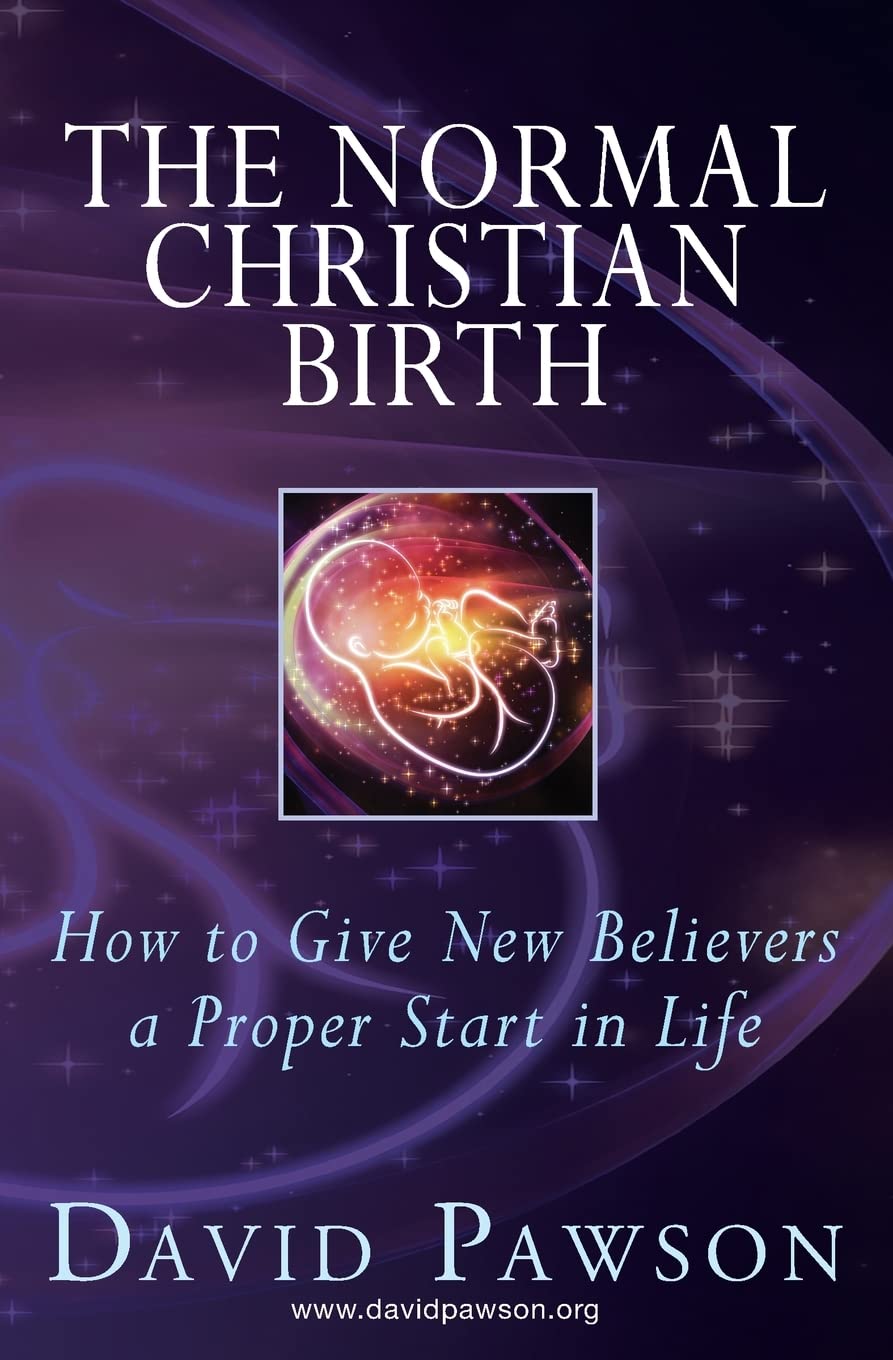
Downtown Angels, summary:
The Normal Christian Birth by David Pawson offers a straightforward and biblical explanation of what it truly means to be born again. Pawson emphasises that the Christian life begins with a clear and conscious decision to repent and place one’s faith in Jesus Christ. He challenges the common misconception that baptism or church membership alone signifies salvation, instead pointing to the essential spiritual rebirth that occurs when a person genuinely turns from sin and trusts in Christ’s sacrifice. This book serves as a clear call to examine one’s faith honestly and to understand that the “normal Christian birth” is an intentional, transformative encounter with God.
Pawson also explores the practical implications of this new birth, showing how it impacts daily living and the believer’s relationship with God and others. He stresses that this spiritual birth is the foundation for growth, holiness, and the power to live a victorious Christian life. By grounding his teaching firmly in Scripture, Pawson encourages readers not to settle for superficial religion but to seek the real, life-changing experience of being born again—the starting point for a genuine and enduring faith journey.
Please click on the link:
https://amzn.to/4iFWd7T
To continue reading more uplifting articles from Downtown Angels, click the image below
David Yonggi Cho
The Extraordinary South Korean Pastor Who Transformed Global Christianity
David Yonggi Cho, the South Korean pastor who founded Yoido Full Gospel Church, became one of the most influential Christian leaders of the 20th century. Rising from poverty and illness, he dedicated his life to ministry and pioneered a model of church growth that would shape global Christianity. Under his leadership, Yoido Full Gospel Church became one of the largest congregations in the world, built on principles of fervent prayer, cell groups, and the active work of the Holy Spirit. Cho’s emphasis on faith, vision, and reliance on God inspired millions and helped spark a wave of church growth throughout Asia and beyond.
Though his ministry later in life was not without controversy, his impact on global Christianity remains undeniable. Countless pastors, churches, and believers were shaped by his teachings on prayer, leadership, and the power of faith in action. His story continues to encourage Christians to believe boldly, pray persistently, and trust God for the impossible. If you’d like to continue exploring powerful stories of influential Christian leaders, click the image below and discover more inspiring articles.
